A replacement package needs its own receiving check, even when the seller already knows the original problem. Compare the new item with the accepted correction and the cabinet it is meant to serve. Record its arrival condition and inspect the actual contents before arranging the corrective work. The label replacement describes why it was sent; it does not establish that the right component arrived intact or that the promised solution is complete.
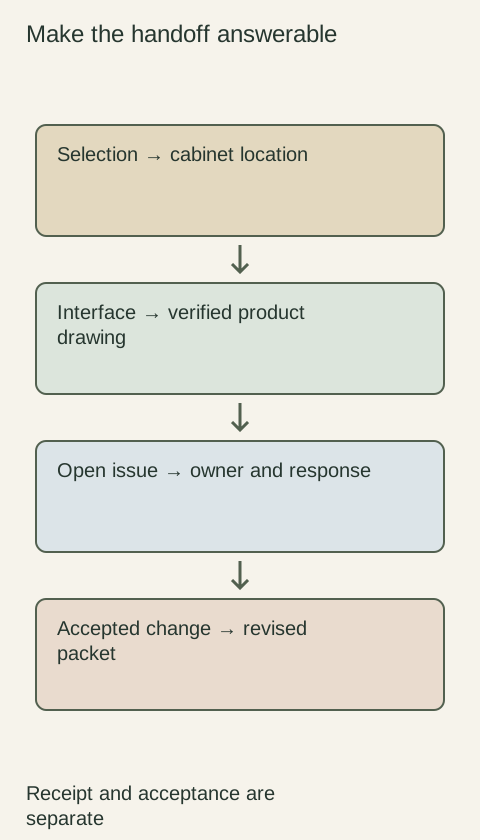
Diagram Check the new shipment against the accepted correction and the intended unit; this diagram does not certify fit or condition.
Use the accepted correction as the reference
Retrieve the supplier's confirmed replacement scope, product identifiers and any agreed change from the original order. Keep these beside the original cabinet reference. If the resolution includes a different component or a wider matching group, the new package should be checked against that accepted arrangement, not an outdated assumption that the seller simply repeated the original order line.
Verify which original issue each arriving package addresses. A project may have more than one open item, and a shipment containing a front for one cabinet does not close a missing-part request for another. Record the relationship explicitly. If a package cannot be connected to an agreed correction, ask the supplier before assigning it to whichever unfinished task looks most similar.
Create a separate arrival record
Check the new shipping labels and visible package condition, and retain the new delivery reference. If something is wrong, identify it as an observation from the replacement arrival rather than adding an undated photograph to the original damage report. Keep the original issue understandable while making clear what happened with the later shipment and when it was discovered.
KraftMaid recommends inspecting a cabinet order soon after arrival. Apply that inspection principle to the replacement as well, following the actual product and supplier instructions. A later corrective shipment still needs review; the fact that its purpose is to resolve a previous problem does not make inspection unnecessary.
Confirm style, finish, dimensions, orientation and the product-specific preparation that formed part of the agreed replacement. A front can look correct from the room side while its back does not match the specified application. Have the installer review the relevant interfaces before fitting it. Do not drill, trim or otherwise modify a questionable replacement merely to make the new shipment appear to solve the case.
Check what was supposed to accompany the part, such as identified fittings or a coordinated companion piece. Distinguish an included component that is absent from existing hardware that the agreed solution intentionally retains. If the supplier proposed an alternative, make sure the installer has the information needed to evaluate that accepted alternative instead of expecting the original component without knowing a change was made.
Test the correction against the original practical problem
Imagine the agreed solution is a prepared replacement drawer front, but the new front arrives without the specified preparation. Its visible finish may look appropriate and its label may say replacement, yet the installer still lacks what the accepted plan required. Confirm the discrepancy with the supplier rather than treating extra site work as an automatic part of the solution.
Where the issue involved a visual group, inspect the replacement in the intended comparison context before final fitting. Where it involved operation or attachment, have the appropriate person confirm the relevant result under the product instructions. These are different checks. A photograph showing the expected color does not demonstrate that a mounting issue has been resolved, and successful fitting does not alone answer a pending appearance question.
Close only the part of the case that is resolved
Update the record to show the replacement received, reviewed and, when applicable, fitted and checked. If the original arrangement includes returning the affected part, confirm the instruction before disposing of it or its packaging. Keep old and new items clearly identified while both remain at the site so the wrong one is not installed or sent back.
Tell the supplier what passed and what remains unresolved, using the new shipment identity where needed. Keep any remaining work visible for the installer and owner. The case is not complete merely because tracking says delivered; it is complete when the accepted correction has been checked and the relevant follow-up is finished. A fresh receiving record makes that distinction possible without confusing the replacement with the original event.
Pure White
Cream White
Light Warm Gray
Gray
Navy
Black
Oak Tone
Dark Walnut Tone
Design study These finish studies are design references, not a list of currently orderable colors. Screens and lighting change the appearance; compare a physical sample before choosing.See all finish options →
The sample shows the door frame, a separate center panel, the face frame and the cabinet box. Each component has its own place in this Shaker construction.
Shaker construction: door frame, center panel, face frame and cabinet box. The cutaway helps locate these parts; confirm each material in the specifications for the selected cabinet.
01 / Door frame
The Shaker door has rails and stiles around a separate center panel. The frame and center panel are different components; confirm their materials in the specifications for the selected cabinet.
02 / Face frame
The face frame surrounds the opening at the front of the cabinet box and sits behind the doors. The face frame, door frame and cabinet box are separate parts.
03 / Cabinet box
The sample exposes the cabinet sides, interior surfaces and layered edges. The image does not establish the wood species or material specification of a selected cabinet.