Built-in or countertop coffee machine: buy the kitchen, not just the appliance
A built-in machine frees a surface but commits part of the cabinet wall. Compare the drink-making method, complete station and future replacement before choosing the cleaner-looking elevation.
Choose a built-in coffee machine when you want its particular brewing system and value integrating it into a planned cabinet wall enough to commit the space and installation work. Choose a countertop machine when its method suits you and you prefer keeping the appliance separate from the cabinet opening. Neither form automatically makes better coffee. The cabinet choice should follow a machine you want to use, rather than making the drink-making method an afterthought.
Distinguish an automatic bean-to-cup routine from a more hands-on espresso setup or another brewing method. Someone who enjoys using a separate grinder and handling the brewing steps is not buying the same experience as someone who wants a saved drink selection. Do not compare those two machines only by their visual footprint. First compare routines that the household would willingly keep.
Miele's US built-in category includes machines with and without its DirectWater designation. A built-in appearance therefore does not, by itself, establish a permanent water connection.
The same manufacturer also offers countertop coffee machines. Those are a separate form of the appliance, so an automatic coffee routine need not be assumed to require a tall-cabinet opening.
A built-in machine occupies a defined place in the cabinet wall. Draw the storage that would otherwise occupy that bay, including any interrupted shelf or drawer arrangement. If the coffee machine displaces the only convenient home for daily dishes, show their new location in the alternative. An uncluttered counter is a real benefit only when the lost storage has been handled elsewhere.
Compare a permitted working height with the complete cabinet composition. A machine aligned with an oven may look deliberate, but the people making drinks still need a usable position. Do not force a difficult height just to preserve a horizontal line across unrelated appliances. The selected unit's installation instructions and the intended user's tasks both belong in that decision.
The countertop alternative takes a working surface instead. Draw the machine in its allowed operating position, with any separate grinder, milk arrangement and accessories that the selected routine needs. An empty silhouette of the machine alone can greatly understate the station. If the plan relies on storing it in a cupboard and moving it out, confirm that the product and household can support that routine; do not count an enclosed storage position as an approved working location.
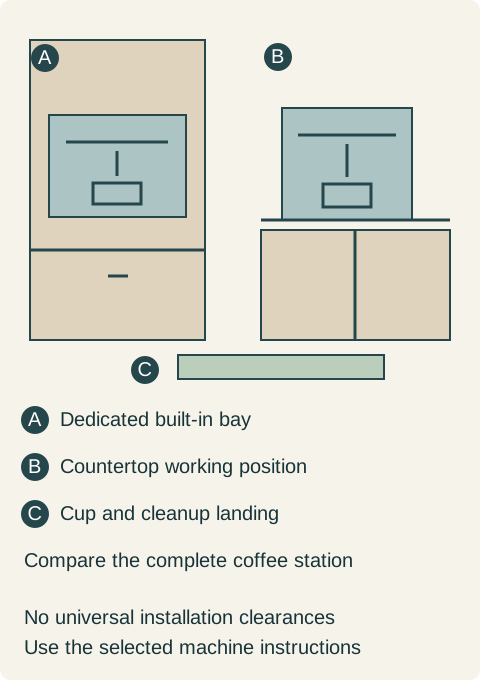
Teaching example Conceptual alternatives: A dedicates a tall-cabinet bay to a built-in machine; B keeps a countertop machine on a permitted open working surface; C represents the cup and cleanup landing both arrangements still need. Not an installation drawing or universal clearance.
Compare complete stations, not photographs with the cups removed
Both alternatives need someplace to receive a drink and deal with the parts and supplies used in making it. The integrated face does not make cups, beans, cleaning materials or used contents disappear. Put those items into the proposed storage and landing arrangement. Keep the area useful while another person is preparing food or unloading dishes nearby.
Decide whether this is a coffee station or a broader breakfast area. A kettle, toaster and children's cups may still occupy the counter after the coffee machine moves into the wall. That may be fine, but it changes the claimed gain. Do not buy a built-in machine to achieve a completely empty worktop if the household has deliberately assigned other daily appliances to it.
Consider how often another person needs to pass through. The best-looking tall-cabinet location may draw coffee traffic across the cooking area. A counter station nearer the dining end could work better, or the reverse may be true. Compare the actual place where the family makes drinks, rather than assuming either appliance form determines a good room layout.
Add the cabinet and installation work to the comparison
Price the selected machine together with the approved housing or working surface, installation and any required connections. Include the finishing pieces needed around the built-in opening and the storage changes elsewhere. For the countertop option, include the actual accessories and cabinet changes retained in that proposal. A machine-only price cannot establish the cheaper completed kitchen.
Keep connection types specific. If a chosen built-in model requires a water supply, have that scope and its service access resolved by the responsible professional. If the candidate uses a refillable reservoir, do not add plumbing merely because another machine in the display has it. Neither arrangement eliminates the other care tasks described in the machine instructions.
Request the relevant maintenance and service requirements before approving the furniture. Automatic rinsing, cleaning or descaling features should be understood as the functions documented for the chosen model, not a promise of no owner work. The detailed refill route can then be planned using the actual machine; that is a different step from deciding whether to buy a built-in station at all.
Think about replacement without predicting a future model
A countertop machine can be considered separately from a fixed appliance opening, but a replacement still has to fit the available working surface and its permitted installation conditions. It is not useful to claim that any future machine will work there. Keep the dimensions and the surrounding constraints in the kitchen records.
A built-in unit creates a more specific relationship with the opening, trim, neighboring fronts and connections. Ask what can be removed for service and which components belong to the appliance rather than the cabinet. Do not reserve a guessed opening for an unknown future model. Record the installed arrangement so a later replacement can be evaluated against something more reliable than a photograph.
One household keeps the countertop machine
In a hypothetical remodel, the owners initially select a built-in machine because they want a quiet-looking cabinet wall and more counter space. During the appliance comparison, they realize they prefer the hands-on method of their countertop espresso setup. The automatic built-in routine is not what they enjoy, even though they like its appearance.
The designer draws the existing machine, separate grinder and working accessories on a dedicated open surface near the dining end. The proposed tall-machine bay becomes usable dish storage, and the daily coffee supplies occupy a nearby drawer. The counter remains visibly a coffee station; the owners accept that rather than pretending a decorative door can enclose the equipment while it operates.
They buy the revised cabinets and approved working arrangement, retaining the machine after checking its conditions and space requirements. Their complete comparison includes the accessories and electrical work actually needed. They do not claim that this proves countertop systems are always cheaper or easier to maintain. They have selected a specific brewing routine and provided a complete home for it.
Another household that prefers the chosen automatic drinks and values the clear surface may select the built-in alternative. Its order should include the displaced storage, complete housing and documented connections. The useful purchase is the station the household will keep using, not whichever machine looks least visible in a staged photograph.
Pure White
Cream White
Light Warm Gray
Gray
Navy
Black
Oak Tone
Dark Walnut Tone
Design study These finish studies are design references, not a list of currently orderable colors. Screens and lighting change the appearance; compare a physical sample before choosing.See all finish options →
Choose the cabinet position after following water, beans and waste through the selected machine’s real access procedure. A comfortable cup height can still leave routine care awkward.
Hinged, lift-up and pocket fronts move the obstruction to different places. Compare the full opening sequence, parked front, usable interior and the appliance’s actual operating location.
The sample shows the door frame, a separate center panel, the face frame and the cabinet box. Each component has its own place in this Shaker construction.
Shaker construction: door frame, center panel, face frame and cabinet box. The cutaway helps locate these parts; confirm each material in the specifications for the selected cabinet.
01 / Door frame
The Shaker door has rails and stiles around a separate center panel. The frame and center panel are different components; confirm their materials in the specifications for the selected cabinet.
02 / Face frame
The face frame surrounds the opening at the front of the cabinet box and sits behind the doors. The face frame, door frame and cabinet box are separate parts.
03 / Cabinet box
The sample exposes the cabinet sides, interior surfaces and layered edges. The image does not establish the wood species or material specification of a selected cabinet.