Two full-size dishwashers or one: is the second machine worth the cabinet space?
A second full-size dishwasher can receive another load while the first is busy. Decide whether that solves an ordinary-day problem, then account for the lost storage, unloading routine and complete installation.
Buy a second full-size dishwasher when a recurring second group of suitable dishes needs a place while the first machine is occupied, and the kitchen can support both appliances without losing more useful storage. Keep one when its real capacity and a workable unloading routine already handle the household's normal day. The second machine should solve a repeated task, not merely make the appliance list look complete.
This is a choice between separate full-size appliances and a single machine. It differs from choosing a double-drawer dishwasher, where each load must fit its own smaller tub within the selected arrangement. Here the owner is committing another appliance position and its complete installation. More washing space is a benefit only when the actual dishes and schedule need it.
Write down when the first machine becomes unavailable
Observe a normal cooking day before changing the plan. Record when preparation bowls and tools arrive, when table dishes arrive, when washing starts and when clean items are put away. Also note the objects that cannot go in the dishwasher. A second machine cannot solve a pile consisting mostly of cookware that requires another cleaning method.
Distinguish a machine that is washing from one that is simply holding clean dishes. The first state prevents receiving a new load during normal operation. The second may be resolved by an unloading routine that the household is willing and able to follow. Those causes can look identical when both leave dirty dishes on the counter, yet they call for different purchases.
Try the credible single-machine alternative. Could a preparation load be started earlier and be ready to unload before the table dishes arrive, using the actual permitted program? Could dishes be put away at an existing break in the day? Do not invent a fast cycle or require someone who is unavailable to perform the work. But do not buy another appliance to solve a delay the family can comfortably remove.
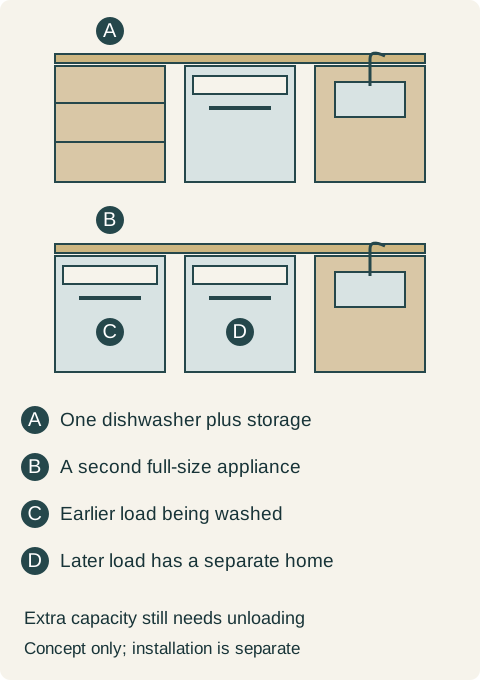
Teaching example Conceptual cabinet allocation and load states. A keeps a storage cabinet beside a dishwasher and sink. B substitutes a second dishwasher for that storage position. C marks the load already being washed; D marks the other machine receiving a later group. The drawing does not specify appliance widths, connections, simultaneous operating requirements or door clearances. It compares complete appliances, not drawers inside one unit.
More cavities do not enlarge any individual rack
Test the dishes that create the second load in an actual full-size candidate. A serving pan that does not fit the permitted rack arrangement will not fit merely because another identical machine is installed beside it. Two appliances allow separate groups; they do not create a single oversized cavity.
Use representative dinnerware and dishwasher-suitable preparation pieces together. If the first load is packed differently each time, the apparent need for another machine may depend on an untested arrangement. Compare reasonable loading under the product instructions, with required movement unobstructed. The point is to identify a genuine daily group that remains after the first machine is correctly loaded.
Sub-Zero, Wolf, and Cove's published showhouse story documents a pair of Cove dishwashers. It establishes a real project example, not a requirement for every kitchen or evidence of how an ordinary household should schedule its dishes.
Your reason for choosing a pair may be quite different from a showhouse's scale or entertaining ambitions. A family that prepares several meals at home can have a regular preparation load and a separate table load. Another family may generate little during the week. Use the home's repeated pattern rather than adopting the equipment count from an impressive photograph.
The second opening has an owner already
On the one-machine plan, name the cabinet contents occupying the proposed second-appliance position. These might be everyday pots, food containers, baking tools or tableware. Do not label the box spare storage unless it is actually spare. The replacement must account for those contents in a place the household can use.
Reassign the whole group, including the less convenient pieces. Moving a few attractive pans to an open shelf does not solve a drawer containing lids and utensils as well. Check the alternative storage with its existing contents present. If the only available home requires crossing the room during every meal, weigh that repeated handling against the cleanup benefit.
Treat the countertop and sink relationship separately from the base opening. Removing a cabinet does not remove the need for a receiving surface for used dishes, and the sink base cannot simply absorb the displaced inventory. Keep enough suitable working area for sorting and loading instead of filling every nearby counter with what no longer fits below.
Place both machines around the work that feeds them
A pair beside the main cleanup area can keep preparation and table dishes near their usual route. It also means the open doors and users share that area. Test each machine being loaded, each being unloaded and both open where that is an intended situation. Do not assume a symmetrical elevation produces independent working positions.
Separating the appliances may suit genuinely different tasks, such as a main cleanup area and another regularly used preparation area. Follow each group's dirty and clean route before doing that. A second machine placed far away merely because a cabinet can be removed there may exchange a pile at the sink for repeated carrying across the kitchen.
Have the responsible professionals establish the complete installation for each selected appliance and any intended concurrent operation. Include connections, required surrounding construction and future access in the scope. This is not a suggestion to split an existing hose or connection, and it provides no universal trade arrangement. The buyer should compare a completed installation, not two appliance-only prices.
A second machine earns its place during the week
Consider a hypothetical household that cooks its main meal while also preparing food for the following day. The dishwasher-suitable preparation bowls, tools and pans form a valid full load. That load is normally washing when dinner finishes, and the table dishes form another permitted load that otherwise remains on the receiving counter.
The owners test the single-machine alternative first. Starting preparation washing earlier would require tools before the cooking work is complete; waiting for the machine to finish moves the later loading into a part of the evening they do not want to reserve for kitchen cleanup. The issue is repeated overlap, not clean dishes left inside through habit.
They select a second full-size dishwasher near the same cleanup area after testing the doors, working positions and both unloading routes. The additional opening replaces a drawer cabinet of occasional baking supplies. That complete group is moved into suitable available pantry compartments, while everyday cooking tools remain near preparation. The new location is acceptable because those baking supplies are not used during most dinners.
The final routine sends the completed preparation group to the first machine and later table dishes to the second. Both loads are unloaded into their assigned cabinets the following morning. The family pays for the full paired installation and accepts losing the nearby baking drawers. It gains a clear receiving counter after the normal evening meal without pretending that unloading has disappeared.
A clean machine is not a permanently empty machine
Some households like taking clean dishes directly from one machine while loading used dishes into the other. If that is part of the proposal, follow it through until the supposedly clean machine contains only the less-used pieces. Those items still need a destination before the machine can receive the next full load. An appliance cannot remain a cupboard and provide empty washing capacity at the same moment.
Keep the status of each load clear to everyone who uses the kitchen. A household convention or the appliance's supported status indication may help, but a pair does not automatically prevent someone adding a dirty cup to clean dishes. Work out an understandable routine rather than relying on the person who last started a cycle to explain it every time.
Compare ongoing care and the complete purchase without assuming either lower utility use or less maintenance from having more machines. Each appliance remains another product to use and maintain. The pair is worthwhile when its actual capacity, cabinet tradeoff and household routine work together. If the ordinary day already works with one, preserving the storage can be the better kitchen purchase.
Pure White
Cream White
Light Warm Gray
Gray
Navy
Black
Oak Tone
Dark Walnut Tone
Design study These finish studies are design references, not a list of currently orderable colors. Screens and lighting change the appearance; compare a physical sample before choosing.See all finish options →
Compare a stacked double appliance with appropriately specified single-drawer locations through real loads, clean-dish turnover and cupboard access. Drawer count alone does not describe useful capacity.
The closest cabinet is useful only if it can be reached and opened while unloading. Map the actual clean-dish destinations with the appliance door and racks in use.
Decide which work leaves the main kitchen before adding a second sink or appliance. A room that hides equipment still needs receiving surfaces, tool storage and a route back to the meal.
The sample shows the door frame, a separate center panel, the face frame and the cabinet box. Each component has its own place in this Shaker construction.
Shaker construction: door frame, center panel, face frame and cabinet box. The cutaway helps locate these parts; confirm each material in the specifications for the selected cabinet.
01 / Door frame
The Shaker door has rails and stiles around a separate center panel. The frame and center panel are different components; confirm their materials in the specifications for the selected cabinet.
02 / Face frame
The face frame surrounds the opening at the front of the cabinet box and sits behind the doors. The face frame, door frame and cabinet box are separate parts.
03 / Cabinet box
The sample exposes the cabinet sides, interior surfaces and layered edges. The image does not establish the wood species or material specification of a selected cabinet.