Choosing a zinc countertop: the edge, patina and cabinet need to agree
A zinc top is more than a gray finish. Compare the actual edge, texture and expected changes before committing the cabinet elevation to a bistro-style metal surface.
A zinc countertop can be a good choice for a kitchen that is meant to show use. It is a poor choice if the purchase depends on a small gray sample staying evenly gray. Before choosing it, review the edge as a piece of metalwork, the texture as a working surface and the changing finish beside the actual cabinet door. Those decisions belong together. A dark, ornate bar edge and a restrained kitchen counter may both be called zinc while producing very different rooms.
Buy an actual metalwork detail, not a color name
Ask the fabricator how the proposed top is made and which portions of the sample represent the final construction. A material name does not explain the substrate, edge return, underside, joints or means of attaching the assembly to the cabinets. A solid-looking edge can conceal a different construction behind it; the drawing should show the proposed assembly rather than leave the installer to infer it from a photograph.
La Bastille describes its zinc tops and edge profiles as cast. That is a documented example of an ornate profile being made as metalwork, not a guarantee that every zinc top or thick-looking edge is cast in the same way.
Examine a corner of the proposed edge if possible. A straight strip does not show how the pattern turns at the exposed end, where pieces meet, or whether the decoration continues around an island. The inside corner beside a tall cabinet also needs a drawn termination. An edge that looks generous in an isolated sample can become visually crowded when it meets a door stile, pull or applied cabinet molding.
Use the whole cabinet elevation to decide how much detail is enough. A strongly profiled metal edge above an already elaborate door may be the intended effect, but it should be chosen deliberately. A quieter cabinet front can give the edge room to be seen. Neither combination is inherently correct; the problem is approving them separately and discovering their combined scale after fabrication.
A smooth sample and a textured top are different work surfaces
Brooks Custom says its uncoated zinc changes in appearance and that its hammered or textured versions are not machined flat. It also identifies visible soldering marks among expected characteristics. These are fabricator-specific descriptions worth discussing before approving a finish.
If a textured top is being considered for a coffee or preparation area, place the actual tray, board and small-footed items on a representative sample. The question is whether they sit and move as you want, not whether the texture photographs attractively. A sample too small to hold the item cannot answer that question. Ask for a larger demonstration or a comparable completed example.
Distinguish a texture you approve from a fabrication defect you would reject. Agree on the expected treatment of corners, joined areas and exposed edges. Do not accept the phrase handmade as an unlimited explanation for any shape or finish. Conversely, do not approve a visibly worked sample and then expect a perfectly uniform machine-finished plane.
The underside matters even when it never appears in a photograph. Confirm the actual backing, fastening provisions and support arrangement with the fabricator and cabinet installer. An island overhang, a long open appliance bay and a fully supported run are different conditions. The fact that the visible surface is metal does not establish a safe unsupported span.
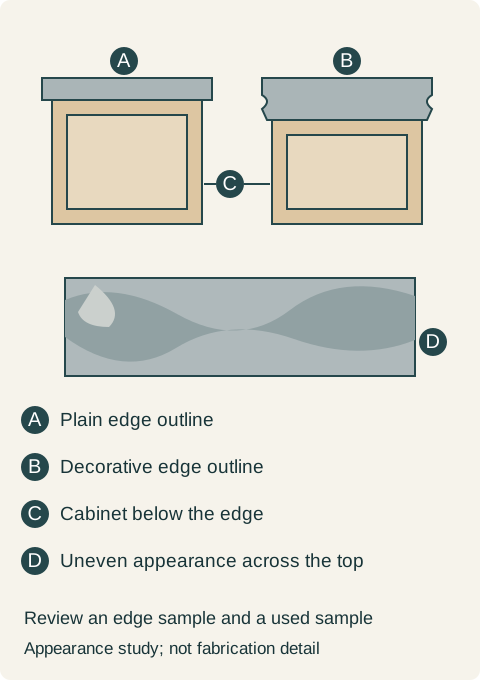
Teaching example Conceptual elevation and plan: an elaborate edge changes the outline above the cabinet, while the same general metal color can have an irregular appearance across the top. Neither drawing predicts a product finish or its aging.
Review change before selecting the surrounding finishes
La Bastille's care page explains that both natural patina and the patina applied in its shop continue to evolve. The shop-applied finish may begin darker and more even, but it is not permanent. Choosing an initial appearance does not freeze the future color.
Ask to compare the proposed new finish with an example that has been used. A used reference shows a possible experience, not the future color map of your own island. A frequently worked area and an out-of-the-way corner will not necessarily receive the same contact or care. Choose the cabinet and backsplash with that variation in mind instead of relying on an exact gray match.
This is particularly useful when pairing zinc with gray painted doors. If the design depends on both surfaces appearing identical, a shifting countertop may undermine the intended match. A deliberate contrast with wood or another confirmed cabinet finish can be easier to assess. It still needs a real sample review under the room lighting; the word warm or cool on a website is not a substitute.
Do not borrow a polishing method from another finish. The maintenance document should identify the fabricator and the selected surface treatment. If the owner's goal is to keep a particular patina, discuss what happens when a mark is addressed and whether the surrounding appearance may also change. A theoretical ability to refinish a surface is not the same as an invisible spot repair.
Work through the complete choice
Consider a hypothetical kitchen with a wood island, plain painted perimeter cabinets and a short beverage counter. The owner likes a zinc bar photograph with a deep decorative edge and pronounced surface variation. Initially that reference is applied to every countertop in the room.
During the sample review, the pronounced edge competes with the island's cabinet detail, and the textured sample does not suit the owner's preferred preparation board. The revised plan keeps the zinc on the beverage counter, with the actual edge and finish approved there. The main preparation surface becomes a separately selected material. The owner accepts that the metal counter will develop visible variation and chooses the adjacent cabinet color as a contrast, not a color match.
This is not a claim that zinc cannot be used throughout a kitchen. Another owner may approve a suitable working texture and welcome the changing metal across the whole room. The useful decision is where the actual assembly fits the way the counter will be used. Reducing its area can preserve the feature the owner wanted without forcing every work surface to serve the same visual idea.
Make the order describe the finished assembly
The proposal should identify the selected metal, construction, edge, surface treatment, joint locations and exposed ends, plus the cabinetry support and attachment responsibilities. Include sink or fixture openings and the way the backsplash meets the top. An attractive edge photograph cannot settle those interfaces.
Keep the approved sample description and care instructions with that proposal. Ask how the surface is protected during the remaining cabinet and appliance work, and how its condition will be documented at handover. Compare the delivered work with the agreed finish, not with an unrelated photograph. The aim is to buy the zinc counter you actually chose, with an honest expectation of how it will be used and how it may look afterward.
Pure White
Cream White
Light Warm Gray
Gray
Navy
Black
Oak Tone
Dark Walnut Tone
Design study These finish studies are design references, not a list of currently orderable colors. Screens and lighting change the appearance; compare a physical sample before choosing.See all finish options →
A dark display sample may have been treated with oil or wax. Compare that state with untreated stone before matching cabinets or promising a uniform black countertop.
A patterned surface and a patterned slab body are different features. Compare an actual cut edge and sink opening before choosing the fabrication detail.
A full-height backsplash is more than extra countertop square footage. Decide its boundaries, visible edges, interruptions and slab layout with the cabinet elevation.
The sample shows the door frame, a separate center panel, the face frame and the cabinet box. Each component has its own place in this Shaker construction.
Shaker construction: door frame, center panel, face frame and cabinet box. The cutaway helps locate these parts; confirm each material in the specifications for the selected cabinet.
01 / Door frame
The Shaker door has rails and stiles around a separate center panel. The frame and center panel are different components; confirm their materials in the specifications for the selected cabinet.
02 / Face frame
The face frame surrounds the opening at the front of the cabinet box and sits behind the doors. The face frame, door frame and cabinet box are separate parts.
03 / Cabinet box
The sample exposes the cabinet sides, interior surfaces and layered edges. The image does not establish the wood species or material specification of a selected cabinet.