A narrow pullout can keep cooking bottles visible, but its shelf spacing is only part of the fit. The bottle must stand in the organizer with its usual cap or pourer, remain supported as the unit moves, and come out without catching a rail or the shelf above. Compare the complete loaded arrangement with your actual bottles before choosing the cabinet width.
Make a working set, including the awkward bottle
Gather the containers you intend to keep beside preparation: the daily oil, a wider bottle, any tall pourer and a reserve package if you expect it to live here. Measure their full stored outlines. A removable stopper still counts if you normally leave it fitted; a handle or pump can project beyond the simple bottle diameter.
Decide whether the pullout is meant to hold the working selection or the entire purchase inventory. A large refill jug may need a broader compartment while the daily bottle fits comfortably in the narrow unit. Keeping that reserve elsewhere can be a deliberate arrangement, not evidence that the kitchen needs a larger pullout for every bottle you own.
The rail changes the removal movement
Check the organizer drawing for shelf depth, rail height, opening width and adjustment positions. When the unit is fully extended, identify the side from which you will take a bottle. The adjacent cabinet, an open appliance or the countertop overhang may limit the approach even though the pullout itself opens.
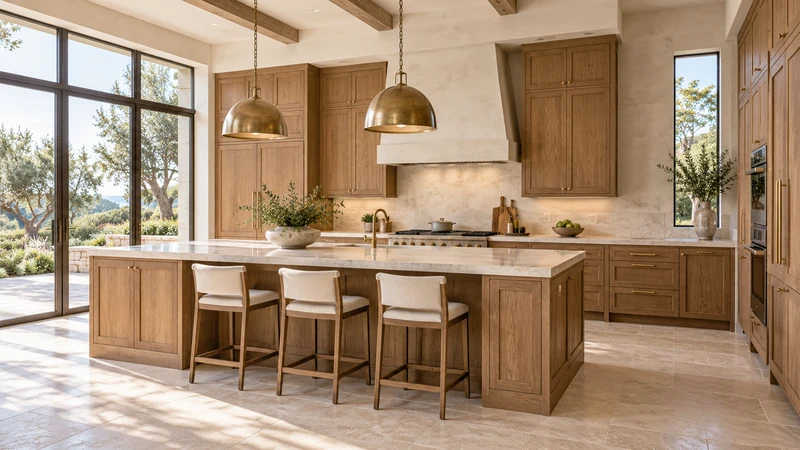
Design study A narrow space beside cooking can suggest a bottle pullout, but this design image does not identify an installed accessory or its clearances.
Imagine a tall bottle that stands beneath an upper shelf but has to rise before its base clears a retaining rail. It may have no room for that lift. A shorter bottle might leave more lifting room but have a wider body that cannot pass the chosen side opening. These are different conflicts, so test height and the removal path separately rather than solving everything by moving a shelf.
Do not rely on tilting an open container through a cramped gap. Test the closed bottle with its normal grip and retain the supports intended by the accessory manufacturer. If an arrangement works only after removing a rail, confirm an approved configuration rather than modifying the organizer to force the fit.
Check stability and cleaning with the whole set present
Place the trial bottles in the positions you would actually use. Check whether narrower containers have suitable support and whether taking the rear bottle requires removing the front row. Follow the selected organizer’s loading limits and installation requirements; a narrow cabinet opening does not tell you how much the hardware can carry.
Plan how drips will be noticed and cleaned without neglecting the cabinet finish underneath. A removable liner or tray consumes space and must be suitable for the accessory and finish. Include it in the fit check. Follow the finish maker’s care guidance and the bottles’ storage directions instead of assuming a nearby cooking location suits every product.
Record the exceptions before choosing the accessory
A useful cabinet note identifies the accessory model, the usual capped bottles, the intended removal side and where refill packages will go. Include a photo of the actual collection if its shapes are hard to describe. This is more actionable than specifying an oil pullout without knowing which bottle makes it necessary.
Try the full cycle: open the pullout, choose the bottle, place it on a suitable work surface, return it and close the unit. If that routine requires reaching around another open door or reshuffling the load, reconsider the location or the collection. The goal is a manageable cooking set, not a narrow column filled to its limit.
Pure White
Cream White
Light Warm Gray
Gray
Navy
Black
Oak Tone
Dark Walnut Tone
Design study These finish studies are design references, not a list of currently orderable colors. Screens and lighting change the appearance; compare a physical sample before choosing.See all finish options →
The best layout exposes the label while leaving room to grasp the container. Test the collection from your normal cooking position before choosing a rack.
The sample shows the door frame, a separate center panel, the face frame and the cabinet box. Each component has its own place in this Shaker construction.
Shaker construction: door frame, center panel, face frame and cabinet box. The cutaway helps locate these parts; confirm each material in the specifications for the selected cabinet.
01 / Door frame
The Shaker door has rails and stiles around a separate center panel. The frame and center panel are different components; confirm their materials in the specifications for the selected cabinet.
02 / Face frame
The face frame surrounds the opening at the front of the cabinet box and sits behind the doors. The face frame, door frame and cabinet box are separate parts.
03 / Cabinet box
The sample exposes the cabinet sides, interior surfaces and layered edges. The image does not establish the wood species or material specification of a selected cabinet.