Serving platters can be easier to retrieve on edge when a compatible organizer supports them individually and leaves a clear path out of the cabinet. That arrangement is not suitable merely because the platter fits between shelves. The opening, divider spacing, weight of the group and room to grip each piece matter too. Compare a supported vertical arrangement with a short, accessible stack before specifying the cabinet.
Choose which edge will rest in the organizer
Measure the complete platter, including handles, raised rims and any uneven shape. An oval platter standing on its long edge has a different height and depth than the same platter standing on its short edge. A round platter does not gain that advantage. Record the orientation you actually intend to use; a dimension written without its direction can easily lead to the wrong cabinet choice.
For a hypothetical example, a platter is 18 inches long and 13 inches high when standing on its long edge. A space with 14 inches of clear height and 20 inches of clear depth accommodates those two dimensions. Turning the platter onto its short edge makes the height 18 inches, so that orientation does not fit. The example does not establish the slot width, hand space or fit through the cabinet opening.
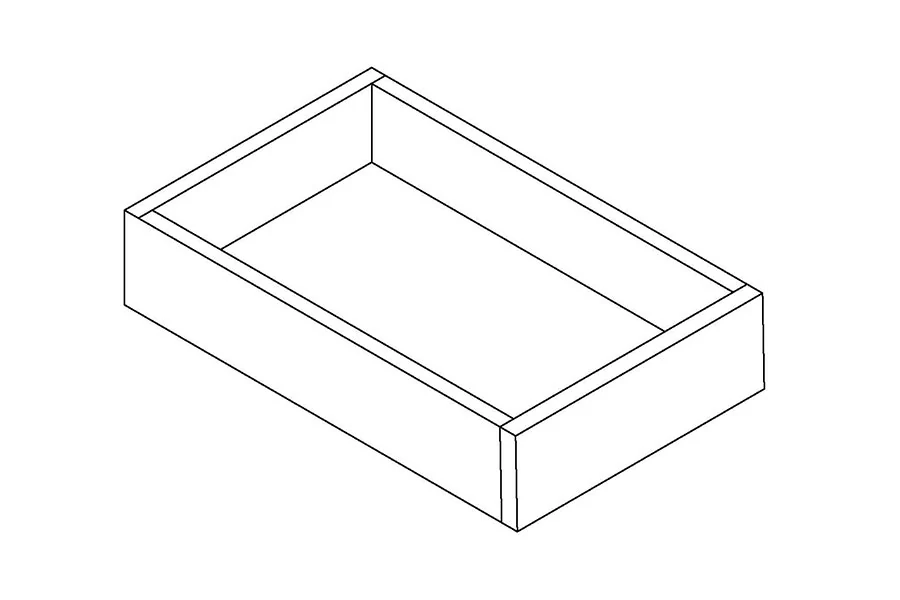
Diagram An accessory drawing can start a discussion about supported storage. It does not establish platter compatibility, divider spacing or a load rating. Browse cabinet and accessory drawings →
Leave room for the rim and your hand
A platter may be thin in the middle but much thicker at its rim. The usable slot must accept the widest relevant part, and you need a way to grip the piece without rubbing it against its neighbors. Test the thickest and most awkward platter rather than assuming every piece behaves like a flat baking sheet. Follow the organizer’s intended use and installation requirements.
Do not fill every available slot simply because the divider has room for another plate. The full group loads the shelf or pullout, its hardware and its cabinet attachment. Confirm the applicable assembly rating and what that rating includes. A number printed for a drawer runner alone is not a complete answer about the finished storage arrangement.
Check the exit path through the opening
Open the cabinet as it will be used. A hinge, face frame or partly opened door can narrow the path even when the interior is wide enough. Practice removing the largest platter with a lightweight outline or other suitable mock-up before committing to a tight layout. Check the movement in front of the cabinet as well; the piece needs somewhere to go once it clears the opening.
For a high shelf, consider whether the user can see, grip and control the platter during removal. Replacing a low stack with vertical storage overhead may make the arrangement harder to use. Place frequently used or awkward pieces where the intended user can handle them comfortably, without treating an above-refrigerator cabinet as the automatic answer for all oversized items.
A short stack may be the simpler arrangement
If only a few compatible platters are used, a short stack on an accessible shelf may require less cabinet space than a divided rack. The drawback is lifting upper pieces to reach the lower one. Put the frequently used piece where it can be removed with the least handling, and use any protective separation according to the dish manufacturer’s guidance.
Keep very large occasional pieces out of the daily group when they force an awkward arrangement for everything else. That does not mean hiding them in an unreachable location. Label the alternate storage and check that the route to the table is manageable when you actually need the platter.
Bring an orientation sketch to cabinet selection
Record platter dimensions in the chosen orientation, the proposed organizer, its occupied footprint and the removal direction. Compare the actual cabinet opening and supports with that sketch. The successful choice lets a person select and return a platter without first dismantling a stack or squeezing it through an untested gap.
Pure White
Cream White
Light Warm Gray
Gray
Navy
Black
Oak Tone
Dark Walnut Tone
Design study These finish studies are design references, not a list of currently orderable colors. Screens and lighting change the appearance; compare a physical sample before choosing.See all finish options →
The sample shows the door frame, a separate center panel, the face frame and the cabinet box. Each component has its own place in this Shaker construction.
Shaker construction: door frame, center panel, face frame and cabinet box. The cutaway helps locate these parts; confirm each material in the specifications for the selected cabinet.
01 / Door frame
The Shaker door has rails and stiles around a separate center panel. The frame and center panel are different components; confirm their materials in the specifications for the selected cabinet.
02 / Face frame
The face frame surrounds the opening at the front of the cabinet box and sits behind the doors. The face frame, door frame and cabinet box are separate parts.
03 / Cabinet box
The sample exposes the cabinet sides, interior surfaces and layered edges. The image does not establish the wood species or material specification of a selected cabinet.