Rustic cabinet wood and a distressed finish describe different parts of an order. The first can concern which natural features the wood selection allows; the second can concern how a newly made surface is deliberately treated. A buyer who wants softly worn painted edges does not necessarily want open knots in the wood, and an aged appearance does not prove that the material was reclaimed.
Natural features and applied wear have different origins
KraftMaid illustrates the distinction in its own range. Its rustic wood choices include open knots and contrasting mineral streaks. Its Vintage technique oversands painted edges and corners to reveal wood, while Distressed uses treatments on stained doors to suggest reclaimed character. These examples describe that manufacturer’s options, not universal definitions of every seller’s rustic label.
That distinction matters when combining material and finish. In its Alder guidance, KraftMaid advises against paint and paint-based specialty finishes because paint would obscure the character and settle unevenly into open knot holes. This advice applies to its offered knotty alder selection; it does not mean all alder lumber is inherently unsuitable for paint.
Separate the order into the wood selection, the intended surface treatment and the actual material origin. If reclaimed timber itself is required, an intentionally distressed new door does not satisfy that requirement. If only an aged look is wanted, buying reclaimed material is not necessary merely because a finish description evokes old wood. The supplier’s construction record should resolve origin, rather than an attractive photograph.
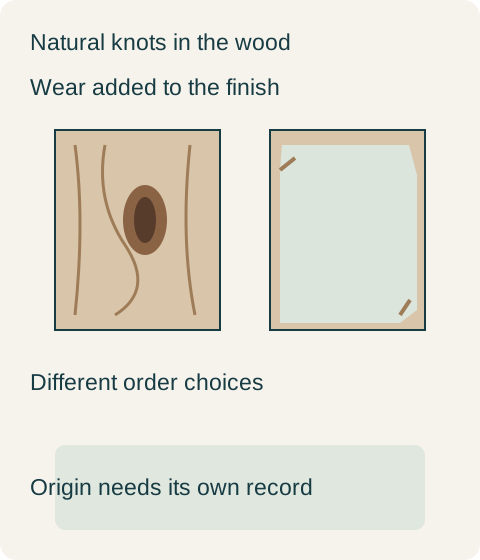
Teaching example Conceptual comparison of natural knots and intentional edge wear. Neither image is an actual finish sample or evidence of reclaimed timber.
Choose worn painted edges without ordering open knots
In a hypothetical kitchen, the owner wants a painted door with softly exposed wood at selected edges but dislikes visible knot holes. A knotty stained option and a paint-grade option with an approved worn-edge treatment are offered. The owner selects the paint-grade package and rejects the knotty alternative, keeping the agreed treatment on the door and companion trim. The order buys intentional edge wear without accepting a different natural-feature selection simply because both options were called rustic.
If the preference instead is for natural knots under a translucent stain, retain the permitted knot and mineral range in the material specification. Do not automatically add manufactured dents or rub-through. Combining both treatments is another appearance choice, and the resulting front may be busier than either sample suggests on its own.
An intentional treatment still has a boundary
Use representative finished pieces to establish where the treatment appears and which companion parts receive it. A deliberately worn corner is not permission for any crack, loose piece or handling damage anywhere in the cabinet. Keep the accepted effect distinct from defects in assembly or changes that occur after the approved sample was made.
The quote should name the wood selection and treatment separately, with the covered components. This lets the buyer understand whether an added amount buys selected character wood, extra finish labor or a different material source. It also prevents a later substitution from being defended only with the vague statement that both doors have a rustic appearance.
Pure White
Cream White
Light Warm Gray
Gray
Navy
Black
Oak Tone
Dark Walnut Tone
Design study These finish studies are design references, not a list of currently orderable colors. Screens and lighting change the appearance; compare a physical sample before choosing.See all finish options →
A color name does not identify a finish system. Compare the decorative surface, the core, the edge and the repair method before choosing a cabinet front.
The sample shows the door frame, a separate center panel, the face frame and the cabinet box. Each component has its own place in this Shaker construction.
Shaker construction: door frame, center panel, face frame and cabinet box. The cutaway helps locate these parts; confirm each material in the specifications for the selected cabinet.
01 / Door frame
The Shaker door has rails and stiles around a separate center panel. The frame and center panel are different components; confirm their materials in the specifications for the selected cabinet.
02 / Face frame
The face frame surrounds the opening at the front of the cabinet box and sits behind the doors. The face frame, door frame and cabinet box are separate parts.
03 / Cabinet box
The sample exposes the cabinet sides, interior surfaces and layered edges. The image does not establish the wood species or material specification of a selected cabinet.