A laundry lost-and-found drawer that returns things instead of hiding them
Pocket items, unmatched socks and repair candidates need different next steps. Give each a visible temporary destination and a route back to its owner.
A laundry lost-and-found drawer should help things leave the laundry room. It should not become a deep drawer where pocket change, single socks, buttons and unrelated household objects disappear together. The useful distinction is the next action: return to an owner, match with another item, or decide whether a repair is wanted. That gives the cabinet a purpose beyond holding clutter out of sight.
Separate pocket discoveries from clean textile questions
Choose a recognizable landing for items discovered during the normal pocket check before washing, following the garment and machine instructions. Keep the product identity or owner information when it matters. An unknown substance, medicine or potentially hazardous object does not belong in a general household catchall; handle it through its appropriate process instead.
Unmatched clean socks enter from a different stage, after the laundry is sorted. They do not need to share a container with gritty coins or objects awaiting identification. A proposed cabinet can hold both categories in separate suitable trays, but do not merge them merely because their pieces are small.
Choose a shallow view before adding depth
Lay the ordinary collection on a surface and see which pieces hide each other. For items that need visual recognition, the useful capacity is what remains visible and retrievable, not the volume of a deep box. A shallow insert may make more sense than filling a tall drawer with stacked bins.
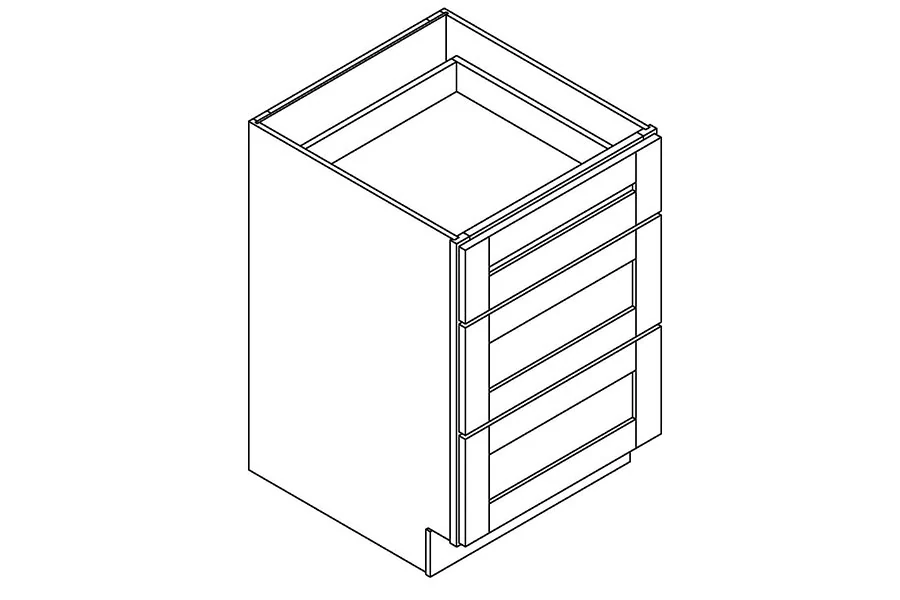
Diagram Front proportions suggest different possible jobs. This drawing gives no clear inside dimensions and does not show a lost-and-found insert.
Check the actual clear drawer dimensions and extension with the chosen tray. The user should be able to lift the tray for review or cleaning without tipping everything onto the floor. A label on the rear divider is not useful if the drawer stops before that divider can be seen from the normal standing position.
Replace the mystery pile with an owner step
Imagine a family putting every recovered object into a deep basket. A key stays there because nobody knows who should take it, while each new load adds more objects on top. A larger basket postpones the problem. A shallow return tray organized by the household’s recognizable owner names addresses the actual delay: deciding where an item goes next.
Do not create a named compartment for every imaginable person or category. Start with the people who use the room and a small clearly defined place for unidentified ordinary objects. Agree who checks that place and how an item returns to its room or owner. This is a household decision, not a universal deadline for discarding property.
Keep unmatched textiles easy to compare
Use a separate container that lets the household compare newly sorted socks with those already waiting. When a possible match arrives, both should be accessible without emptying unrelated supplies. The container is temporary staging, so its contents need a periodic review linked to the household’s actual laundry cycle.
Set repair candidates aside only when someone intends to make a decision. A loose button without its garment or owner can quickly lose its meaning. Keep that relationship identifiable in an appropriate container, and store sharp repair tools separately under their suitable handling and storage requirements.
Size the drawer after trying the return routine
Try the arrangement in removable trays before dedicating a whole cabinet to it. Notice what leaves, what stays and why. If objects remain because nobody makes the return trip, another drawer will not fix the routine. Change the handoff, then reassess capacity.
Bring tray outlines and the required view into the cabinet selection. A small accessible drawer near sorting may serve better than a large remote cupboard. Keep the finished plan specific: ordinary pocket finds go to their owners, unmatched clean textiles go to matching, and repair questions keep their garment identity until a decision is made.
Pure White
Cream White
Light Warm Gray
Gray
Navy
Black
Oak Tone
Dark Walnut Tone
Design study These finish studies are design references, not a list of currently orderable colors. Screens and lighting change the appearance; compare a physical sample before choosing.See all finish options →
Separate a temporary transfer shelf from permanent linen storage. Organize finished loads by destination so the laundry cabinet does not hold everyone’s unfinished return trip.
Entry gear and clean laundry can share a room without sharing every surface. Assign the arrival, washing and departure tasks before choosing one continuous cabinet run.
The sample shows the door frame, a separate center panel, the face frame and the cabinet box. Each component has its own place in this Shaker construction.
Shaker construction: door frame, center panel, face frame and cabinet box. The cutaway helps locate these parts; confirm each material in the specifications for the selected cabinet.
01 / Door frame
The Shaker door has rails and stiles around a separate center panel. The frame and center panel are different components; confirm their materials in the specifications for the selected cabinet.
02 / Face frame
The face frame surrounds the opening at the front of the cabinet box and sits behind the doors. The face frame, door frame and cabinet box are separate parts.
03 / Cabinet box
The sample exposes the cabinet sides, interior surfaces and layered edges. The image does not establish the wood species or material specification of a selected cabinet.