Stainless steel cabinets at home: buy the interior or only the metal appearance?
A residential stainless kitchen is a complete cabinet-system choice. Compare its interior, door construction and everyday handling before paying for more metal than the visible front.
Choose a complete stainless steel cabinet system when you want its actual interior construction and working details, not simply because you like a silver kitchen front. A wood-based cabinet with a metal-facing package can provide a metallic appearance without becoming the same furniture. Open the proposed units and compare how you will store, retrieve and clean around your belongings. The useful question is what the additional construction changes in your kitchen.
Start inside an empty cabinet
Remove the display props from the comparison. Inspect the bottom, back, corners, shelf supports and the area immediately behind the door. Decide which surfaces you can reach with the intended shelves and fittings in place. A clean-looking empty compartment may be much less accessible after a fixed organizer has been installed. The outer steel finish says little about this interior arrangement.
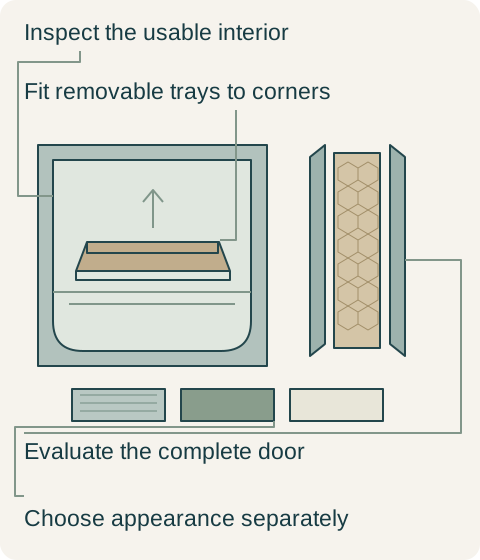
Abimis offers interior compartments with rounded lower corners or with all inner corners rounded. These are specific module options presented for easier cleaning. They show that interior geometry remains a purchase choice even within a stainless kitchen program.
Compare those shapes with the objects you use. A square-edged removable tray need not nest tightly into a rounded compartment. Check its real resting position and whether you can lift it out without emptying the whole shelf. If you want a liner, include its removal and the surface beneath it in the routine. Covering a compartment with a permanent-looking mat can hide the very interior detail that attracted you to the system.
Teaching example Hypothetical residential cabinet comparison: a rounded interior and removable tray are shown beside a completed sandwich door and exterior finish swatches. Geometry is explanatory, not a fabrication section, acoustic test or universal stainless cabinet specification.
Then follow a routine cleanout: remove the stored objects, reach the rear, lift out the permitted accessories and put everything back. This is a practical access comparison, not a laboratory hygiene test. Do not translate the word stainless into a promise of a self-cleaning cabinet, unrestricted washing or suitability for every cleaning chemical. The selected product still needs its own care instructions and a way to deal with spills.
Listen to the completed door, not a loose metal sample
Abimis describes an aluminum honeycomb core inside Ego doors and tops, used to reinforce the assembly and dampen hollow sound. This named construction is a useful reminder that a stainless kitchen need not contain stainless steel through every layer of every component.
Try a representative completed door and drawer with ordinary contents, using the same normal opening and closing actions for each alternative. Listen from the working position and the nearby dining seat. A loose sheet tapped on a counter cannot represent the supported door, and a quiet showroom drawer with no utensils cannot settle the sound of your own stored equipment. Avoid assigning a numerical sound rating from that informal demonstration.
Keep the effects of hardware and accessories separate from the cabinet material. A soft closing mechanism controls part of the motion; a removable organizer changes where utensils contact the interior. Neither makes every steel system behave alike. Likewise, a wood-based cabinet is not automatically quiet with metal pans sliding around inside it. Buy the combination whose actual handling you accept, including the inserts needed for your routine.
Choose the surface without losing the construction
Abimis lists exposed steel finishes as well as painted exterior finishes for its stainless kitchen system. Exterior color therefore does not identify the underlying cabinet construction. The cited options are that manufacturer’s program, not a claim that any finish can be applied to any cabinet.
Put the finish in the room with the appliances that will stay. A highly reflective front can show more of the surrounding activity than a less reflective one; decide which appearance you want from the dining area. Compare the complete door face and edge rather than trying to match every metal to the refrigerator by name. If a painted exterior is preferred, retain the actual surface-care requirements rather than using instructions for bare stainless on that coating.
The countertop is another separate choice. A steel cabinet body does not require a steel worktop, and a steel worktop does not prove a steel body below it. Compare the intended top, sink and appliance arrangement as part of the complete proposal. This keeps a preference for the working surface from silently purchasing a different interior, or a preference for a cleanable interior from forcing an unwanted reflective countertop.
A cooking-focused household pays for the inside
In a hypothetical home renovation, the owners initially compare a metal-faced wood-based kitchen with a complete stainless system. They already like the same restrained metallic exterior on both. Their deciding concern is emptying and cleaning the cabinets used for large pans after intensive cooking, rather than making the room resemble a restaurant. They bring their usual pans and removable trays to a representative demonstration.
They choose the stainless system with the accepted rounded interior configuration, accessible shelves and removable organizers. The demonstration shows where each tray sits and how it comes out; the owners also accept the sound of the loaded drawer and completed door. They omit a fixed organizer that blocks access to the rear corner and retain a less reflective exterior sample that works beside their existing appliances. The final purchase names those choices, rather than merely requesting an all-metal kitchen.
The metal-facing alternative remains a reasonable choice for a household seeking only that exterior appearance and satisfied with its specified wood-based interior. In the hypothetical purchase, however, substituting metal-faced doors on ordinary boxes would remove the interior features that justified the choice. Compare prices only after both proposals include the chosen storage, finished exposed sides, countertop scope and installation work. The stainless system earns its place through the way this family will use it, not through an assumed universal ranking of metal over wood.
Pure White
Cream White
Light Warm Gray
Gray
Navy
Black
Oak Tone
Dark Walnut Tone
Design study These finish studies are design references, not a list of currently orderable colors. Screens and lighting change the appearance; compare a physical sample before choosing.See all finish options →
A formed stainless skin over a backer and a solid plate are different assemblies. Compare the underside, edge, backsplash and cabinet interfaces as a complete countertop.
Compare the actual countertop products, heat-source routine and fabrication proposal. A fired porcelain slab and resin-bound quartz are different materials, but neither label replaces a complete kitchen specification.
The sample shows the door frame, a separate center panel, the face frame and the cabinet box. Each component has its own place in this Shaker construction.
Shaker construction: door frame, center panel, face frame and cabinet box. The cutaway helps locate these parts; confirm each material in the specifications for the selected cabinet.
01 / Door frame
The Shaker door has rails and stiles around a separate center panel. The frame and center panel are different components; confirm their materials in the specifications for the selected cabinet.
02 / Face frame
The face frame surrounds the opening at the front of the cabinet box and sits behind the doors. The face frame, door frame and cabinet box are separate parts.
03 / Cabinet box
The sample exposes the cabinet sides, interior surfaces and layered edges. The image does not establish the wood species or material specification of a selected cabinet.