Synchronized woodgrain texture or all-over embossing for cabinet fronts?
Choose the relationship between the printed grain and the relief you can feel. A registered texture is a surface choice, not proof of solid wood or a universal durability upgrade.
Choose a synchronized woodgrain surface when touching the visible grain is an important part of the cabinet experience. Choose an all-over texture when its feel and appearance already satisfy the design. The purchase is about the relationship between print and relief, not simply the amount of texture. Neither a deeply embossed face nor a convincing oak image establishes that the door is made of oak. Keep surface design, board construction and suitability for the intended component as separate decisions.
What your hand follows on the face
EGGER identifies Feelwood Oakgrain as a synchronized-pore surface and explicitly calls its decors reproductions. The useful distinction is registration: the relief is intended to correspond to the visible grain. On a sample, follow a prominent printed feature with a fingertip, then change the viewing angle. Look for the relationship between the shape you see and the shape you feel, rather than simply deciding whether the face feels rough or smooth. A flat photograph cannot convey that relationship.
An all-over wood-pore texture is also a deliberate design. EGGER describes its Omnipore Oiled texture in those terms. It need not trace each particular printed feature to be a satisfactory cabinet surface. If a calm visual pattern and a pleasant general feel matter more than tracing a knot, the all-over option may already deliver the desired result. Do not reject it merely because synchronized sounds like a higher rank. The relevant difference needs to be perceptible and useful in the place where the finished cabinet will be used.
The surface is made, not carved from the pictured tree
In its PerfectSense Feelwood explanation, EGGER describes pressing a synchronized texture plate during lamination and using a different texture on the reverse. This illustrates why the front face alone does not identify the whole board. For purchasing, turn the sample over and inspect the actual door edge. A buyer can love the front and still prefer a different reverse appearance. The face texture should therefore be selected as part of the offered door, rather than treated as a complete component specification.
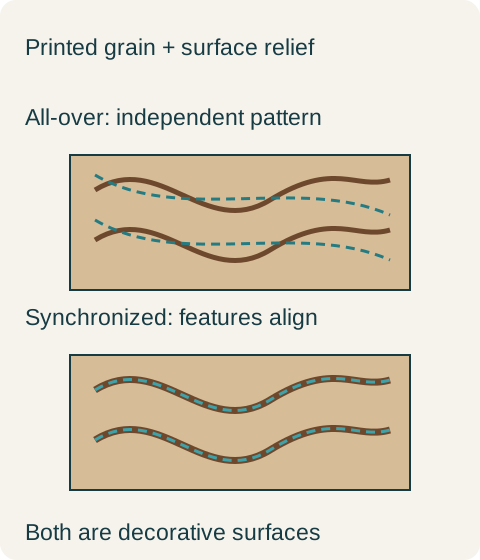
Diagram Conceptual comparison of printed grain and relief. Dark curves represent the print; teal dashed curves represent relief. Registration is illustrated without claiming a tolerance, exact product pattern or material performance.
An island front where the tactile difference earns its place
In a hypothetical kitchen, visitors sit beside an island and often touch its broad cabinet fronts. The owner compares an all-over woodgrain sample with a synchronized sample in the chosen color family. On the latter, the relief follows the printed grain in a way the owner notices and prefers. The owner selects that complete front, accepts its actual reverse and edge samples, and retains the simpler existing material inside the closed storage. The decision spends on the surfaces that matter to this use, without declaring every hidden panel inferior.
These are hypothetical project alternatives, not a claim that one manufacturer offers an identical decor in both constructions. If the samples have different grain pictures, separate the judgments. First decide whether the color and pattern fit the room; then decide whether the print-to-relief relationship adds enough to justify the complete offered price. Otherwise a preference for a quieter grain image can be mistaken for a preference for the manufacturing process. That mistake can send a buyer toward the wrong replacement when the preferred image is unavailable.
Matching the edge is another material selection
EGGER’s Finish Match system coordinates decorative boards, laminates and edge banding, directing final color selection to original samples. Use that as a model for evaluating a set of components, rather than assuming one surface label covers everything. Put the actual edge beside the face in the position it will occupy on the door. For the island example, the accepted edge is part of the selection even though it does not reproduce every visible grain feature on the broad face. A coordinated appearance is the goal, not an imaginary solid block of printed wood.
The same distinction matters at a side panel or a return. A continuous-looking cabinet can consist of separately fabricated parts. Make the visible relationships explicit in a simple elevation: which fronts are seen together, which return is exposed and which inside face appears when a door opens. This is a design review, not a demand that all those parts be the same material. In the example, the owner accepts the reverse when open and the quieter cabinet interior because the tactile effect is concentrated on the exterior island faces.
Separate a texture preference from service requirements
Synchronized describes a relationship in the surface design. By itself it does not supply a scratch test result, a cleaning instruction, an impact rating or approval for a horizontal working surface. Compare those requirements for the actual products being quoted. This prevents an attractive sample from carrying claims it was never intended to demonstrate. For the hypothetical island, the choice is a cabinet front offered and accepted for that use; the owner does not extend the decision to the worktop merely to obtain the same grain image.
A fair cost comparison includes the completed front, its edges, reverse and fabrication. A price for a raw board does not tell the buyer what the finished door will cost. If the synchronized alternative changes the whole offered material system, describe the difference instead of attributing every dollar to embossing. The owner in the example can then judge the actual exterior-door purchase against the actual alternative. No universal premium or saving is needed to make that decision clear.
Retain a physical reference that shows the chosen face, edge and reverse, together with the decor and texture identification. The photograph remains useful for locating the pattern, while the physical sample preserves what was selected by touch. The completed island choice is a synchronized exterior front because the owner values its registered relief in that setting. Another cabinet viewed mostly from across the room could reasonably use the accepted all-over option. The purchase follows a visible and tactile preference with a defined scope, rather than a texture label used as a general quality score.
Pure White
Cream White
Light Warm Gray
Gray
Navy
Black
Oak Tone
Dark Walnut Tone
Design study These finish studies are design references, not a list of currently orderable colors. Screens and lighting change the appearance; compare a physical sample before choosing.See all finish options →
A cabinet color that looks warm online can read differently next to your floor. Compare an identified physical sample in the positions and lighting where the cabinets will live.
Compare the actual countertop products, heat-source routine and fabrication proposal. A fired porcelain slab and resin-bound quartz are different materials, but neither label replaces a complete kitchen specification.
The sample shows the door frame, a separate center panel, the face frame and the cabinet box. Each component has its own place in this Shaker construction.
Shaker construction: door frame, center panel, face frame and cabinet box. The cutaway helps locate these parts; confirm each material in the specifications for the selected cabinet.
01 / Door frame
The Shaker door has rails and stiles around a separate center panel. The frame and center panel are different components; confirm their materials in the specifications for the selected cabinet.
02 / Face frame
The face frame surrounds the opening at the front of the cabinet box and sits behind the doors. The face frame, door frame and cabinet box are separate parts.
03 / Cabinet box
The sample exposes the cabinet sides, interior surfaces and layered edges. The image does not establish the wood species or material specification of a selected cabinet.