

Bath & laundry planning
Salon shampoo station or an ordinary vanity cabinet?
A salon shampoo station should be purchased around its bowl, client position and operator's working sequence. An ordinary vanity cabinet is not an equivalent candidate merely because both contain a basin. Compare a purpose-built shampoo assembly with a fully coordinated alternative that can support the same professional task, including the chosen bowl, towels, products and equipment access.
A salon shampoo station should be purchased around its bowl, client position and operator's working sequence. An ordinary vanity cabinet is not an equivalent candidate merely because both contain a basin. Compare a purpose-built shampoo assembly with a fully coordinated alternative that can support the same professional task, including the chosen bowl, towels, products and equipment access.
Define the client and operator arrangement first
Identify the intended washing method, bowl and chair arrangement. Have the responsible equipment and installation parties confirm how the selected components work together. A basin used by a standing person washing hands does not establish a suitable position for a client having hair washed.
Place both people on the plan and show the operator reaching the actual bowl and supplies. Include the chair's documented operating positions and the movements needed to arrive and leave. Review applicable project requirements with the responsible parties; a furniture drawing alone cannot approve the commercial use.
Collins describes a shampoo cabinet with clean-towel storage above, used-towel collection below and a bottle well. Its referenced bowl is ordered separately, so the cabinet listing is not a complete bowl purchase.
Reading note: Collins: shampoo bulkhead cabinet and separate bowl scope.
Specify the bowl mounting as part of the assembly
Confirm the actual bowl, its supported mounting and the cabinet or bulkhead required to receive it. Obtain sections showing how the selected parts meet, including the surrounding top or splash arrangement. Do not replace these details with a generic sink cutout on an ordinary vanity drawing.
If considering another cabinet, ask its supplier and the equipment installer to review that exact use and mounting. The alternative needs a documented complete solution rather than a verbal assumption that any cabinet maker can adapt it. Keep the responsibility for the interface visible in the order.
Separate clean supply from used-towel collection
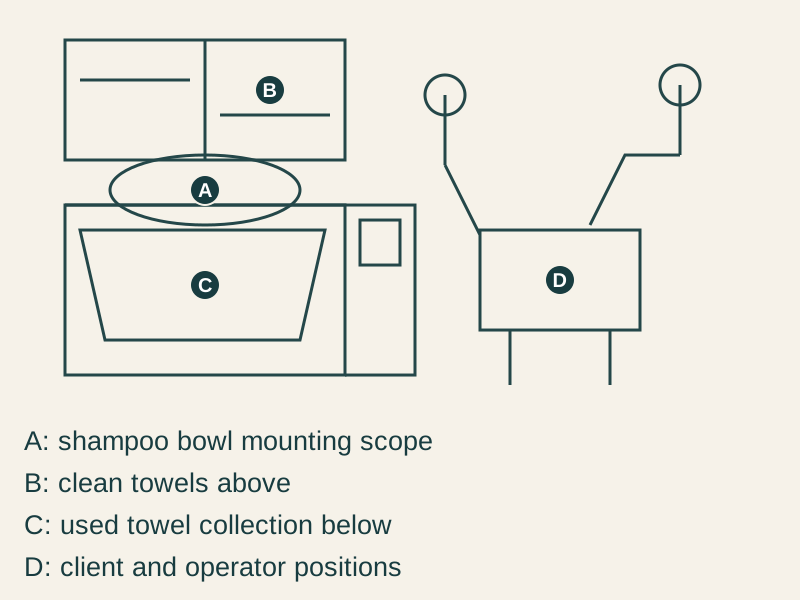
- A
- A: shampoo bowl mounting scope
- B
- B: clean towels above
- C
- C: used towel collection below
- D
- D: client and operator positions
Map the movement from taking a clean towel through use to the designated collection point. Identify which compartment is for each task and how the operator reaches it. The owner should not have to choose between leaving a cabinet open and balancing supplies on the bowl edge during the ordinary routine.
Plan replenishment and removal as well. Show where clean stock waits and how used towels leave the cabinet for the salon's handling process. A bin inside cabinetry still needs its actual opening and removal movement. This is workflow planning; it does not establish hygiene performance or replace the operator's required procedures.
Test products with the station in use
Place the actual working bottles in their intended well or compartment. Check whether they can be selected and returned while the operator remains in the planned working position. Keep reserve stock separate if storing it at the station would obstruct the task.
Compare this with the ordinary-vanity proposal using the same products, not an empty counter. Draw any tray, cart or additional storage needed to complete that alternative. A cabinet that requires a separate cart may still work, but its full occupied arrangement belongs in the purchasing comparison.
Follow a professional purchase decision
Imagine a salon comparing a purpose-built shampoo cabinet with a less costly cabinet-only vanity quotation. The hypothetical vanity offer does not yet include an approved bowl mounting, towel collection or nearby product storage.
The owner obtains a complete alternative: the selected bowl arrangement is reviewed, towel handling receives real locations and the required additional furniture is included. The apparent difference between the original quotations changes because the lists now reach the same working result.
The purpose-built option is chosen when its confirmed arrangement supports the operator and its complete scope is preferable. An independently coordinated alternative could also succeed if it resolves those same tasks. Neither choice should rely on an unverified promise of faster service or a generic claim that commercial furniture is automatically more durable.
Keep equipment access and cleaning practical
Ask the installation and service parties to identify how the necessary equipment is reached after the cabinetry, bowl and adjacent furniture are complete. Distinguish access to a component from removal of the bowl or cabinet. Keep towels and product boxes from occupying the agreed working position.
Review the station's ordinary cleanup with the actual compartments and their instructions. Removable collection parts need somewhere to be handled. A polished front elevation does not show whether a staff member can empty the collection area or reach the intended surfaces without dismantling unrelated furniture.
Compare the order as a working station
List cabinet, bowl, relevant fittings, chair, product storage, towel storage and collection, installation coordination and surrounding finish scope. Identify the supplier of each and the person responsible for their relationship. Use actual quotations and confirmed product information for the chosen configuration.
Before release, have the operator review the finished arrangement with the equipment and cabinet parties. Keep model identities, mounting details and access drawings in the project record. Buy the purpose-built shampoo station when that complete assembly fits the work; buy an alternative only after it has been developed to the same usable professional result.
Sources & further reading
- Collins: shampoo bulkhead cabinet and separate bowl scope