Reconstituted wood veneer is not automatically a printed imitation, but a familiar wood-pattern name does not identify its raw species. A buyer who wants a real wood surface and a buyer who specifically wants natural walnut may therefore make different choices. State which requirement matters before comparing the samples.
The pattern is built into a recomposed wood block
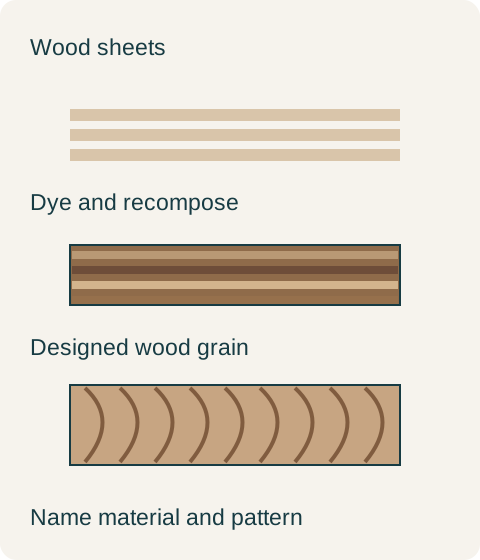
ALPI describes using woods such as poplar, lime wood and ayous, then dyeing and recomposing sheets into a new block for its decorative veneer process. The visible design is created through wood processing. That is different from merely printing a grain image, and also different from selecting the natural grain of a log of the depicted species.
The distinction belongs in a quote: identify reconstituted wood veneer, its product pattern and the disclosed raw-material description. Do not quietly shorten a walnut-like design name to natural walnut veneer. Conversely, calling it artificial without explaining the actual wood construction can mislead a buyer whose requirement is a wood surface rather than a particular species.
The face still needs a specified core, reverse construction and finish. A recomposed pattern does not make a complete cabinet door solid wood, and it does not establish how the edges will match. Review neighboring completed fronts and an edge detail, because the chosen visual rhythm must continue through the manufactured components rather than only through loose veneer sheets.
Teaching example Conceptual manufacturing sequence. The illustrated colors do not identify a commercial pattern or raw species, and the drawing is not a production recipe.
Choose the engineered pattern when real wood matters more than botanical walnut
Suppose a hypothetical buyer wants real wood faces with a restrained, repeatable walnut-like design, but does not require walnut as the raw species. Natural walnut samples show a variation range the buyer does not prefer. A documented reconstituted veneer package provides the preferred pattern on the selected finished panels. The buyer selects that package and records it as reconstituted wood with its identified pattern, not as natural walnut.
In that hypothetical purchase, the accepted edge and adjacent-front samples belong to the same package. A requirement for actual walnut would change the decision: the decorative name would not satisfy it. Keeping the two preferences separate avoids paying for a species claim that was never part of the supplied material, while allowing an engineered wood design to be chosen on its own merits.
Designed grain does not mean permanent color identity
ALPIlignum’s technical sheet says it is supplied uncoated, can vary slightly from its reference color, and can fade or change color with light exposure. It also ties lightfastness to the final coating. The controlled pattern should therefore not be sold as a promise that future panels will always match an installed, aged kitchen without review.
Retain the exact veneer pattern, actual construction and approved finished range. If another batch or replacement is needed, compare it with the installed condition and the retained sample. The useful purchase distinction is natural-species veneer versus deliberately recomposed wood design, with both choices still requiring a complete and accurately described cabinet panel.
Pure White
Cream White
Light Warm Gray
Gray
Navy
Black
Oak Tone
Dark Walnut Tone
Design study These finish studies are design references, not a list of currently orderable colors. Screens and lighting change the appearance; compare a physical sample before choosing.See all finish options →
The sample shows the door frame, a separate center panel, the face frame and the cabinet box. Each component has its own place in this Shaker construction.
Shaker construction: door frame, center panel, face frame and cabinet box. The cutaway helps locate these parts; confirm each material in the specifications for the selected cabinet.
01 / Door frame
The Shaker door has rails and stiles around a separate center panel. The frame and center panel are different components; confirm their materials in the specifications for the selected cabinet.
02 / Face frame
The face frame surrounds the opening at the front of the cabinet box and sits behind the doors. The face frame, door frame and cabinet box are separate parts.
03 / Cabinet box
The sample exposes the cabinet sides, interior surfaces and layered edges. The image does not establish the wood species or material specification of a selected cabinet.