

Bath & laundry planning
Vented or ventless dryer: choose the room arrangement before cabinets
Choose between vented and ventless drying by comparing two complete laundry installations. A viable exterior exhaust route can favor retaining a vented arrangement; a ventless model may make another location possible when its own installation requirements are met. The cabinet gain must survive the actual machine, drainage, operating conditions and service access. Removing a dryer duct from the drawing does not create an unrestricted furniture enclosure.
Choose between vented and ventless drying by comparing two complete laundry installations. A viable exterior exhaust route can favor retaining a vented arrangement; a ventless model may make another location possible when its own installation requirements are met. The cabinet gain must survive the actual machine, drainage, operating conditions and service access. Removing a dryer duct from the drawing does not create an unrestricted furniture enclosure.
Establish whether the location can support each alternative
Start with the room the owner wants to use and the work that moving laundry would eliminate or create. An interior room beside bedrooms may shorten the clothes route but require different equipment and connections. An existing laundry wall may already provide a workable installation. Compare those actual options rather than assuming that one drying technology belongs in every home.
Whirlpool describes ventless drying as removing moisture through condensation, while vented dryers exhaust humid air outdoors. That difference does not eliminate the selected equipment's room and installation requirements.
Reading note: Whirlpool: ventless dryer operation and comparison with vented drying.
Have the relevant installer review the proposed arrangement before fixing cabinet dimensions. For a vented option, show the actual intended exhaust system. For a ventless option, identify how the selected model handles collected moisture and what its instructions require around the machine. Neither proposal is complete when these items are left as a vague note to connect later.
Separate the missing duct from space available for storage
The space behind a machine is not always a cabinet opportunity. Connections and installation conditions can remain even when an exterior exhaust is absent. Obtain the actual machine depth, open-door geometry and required installed arrangement. A photograph of a ventless dryer flush with furniture is not a drawing for another model or another room.
Then draw the adjacent cabinet as an independent useful object. If the technology change only gains a thin strip that cannot hold the intended inventory, reconsider whether it is a real storage benefit. A better location or a simpler room route may still justify the choice, but the explanation should identify that value rather than promising a cabinet the completed installation cannot accept.
Decide how moisture will leave the machine
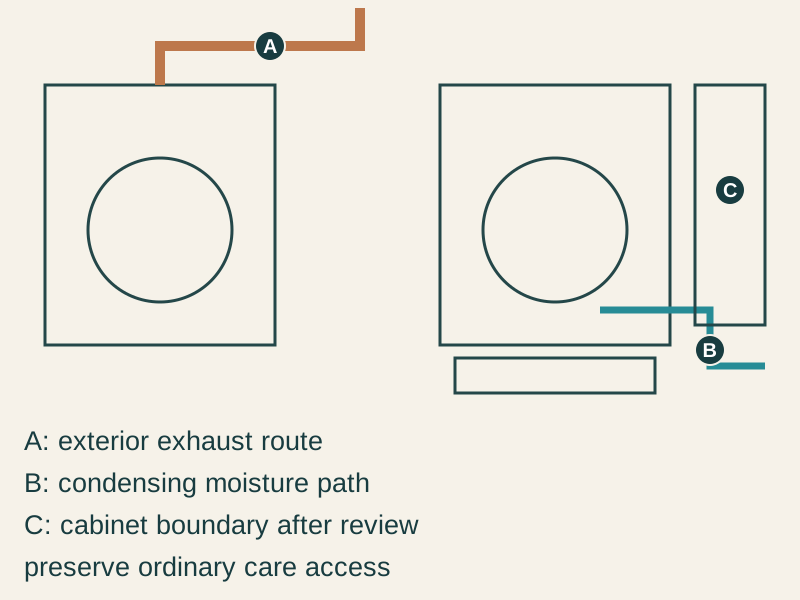
- A
- A: exterior exhaust route
- B
- B: condensing moisture path
- C
- C: cabinet boundary after review
Where the chosen equipment offers alternative water-handling arrangements, compare the ordinary tasks they create. A manually emptied container needs reachable removal and a destination for emptying. A reviewed drain connection needs the appropriate route and access. Follow the candidate model's documentation; this is a purchase choice to resolve with its installer, not permission to improvise a discharge into a convenient cabinet opening.
Imagine carrying out the ordinary task while the surrounding cabinet doors, countertop and baskets are in their normal positions. A container can fit inside the appliance yet be awkward to withdraw under a projecting countertop. A connection can be neatly hidden yet difficult to reach for attention. Choose the cabinet boundary after the maintenance movement and connection plan are understood.
Compare two finished locations
In a hypothetical project, an existing exterior-wall laundry position has an accepted vented arrangement and provides a 30-inch work cabinet. An interior alternative can accommodate a reviewed ventless system with a 24-inch work cabinet. The move gives up 6 inches of cabinet width. These are invented project allocations, not equipment dimensions or prescribed clearances.
The interior position shortens the household's everyday clothing route and lets the old laundry room serve another agreed purpose. The owner tests the smaller work cabinet with the supplies and basket actually assigned to it. Its interior and surface can handle that group, so the lost width is an accepted trade rather than an undiscovered shortage.
The owner chooses the interior ventless arrangement after its installation and water-handling method are resolved. If the cabinet trial had failed, the shorter route would not automatically outweigh the missing task space. Likewise, a household with a well-functioning exterior-wall setup may reasonably retain vented equipment and spend its cabinet budget on improving sorting and transfer there. The technology name does not settle the purchase.
Preserve access to ordinary care points
Identify the exact locations and motions for filters, containers and other user care described by the selected product. Include the space where the user stands and places removed items. Finish panels, plinths and cabinet handles can interfere with these movements even when the appliance body fits. Test the chosen arrangement with its ordinary front treatment installed.
Also retain a credible professional service and removal sequence. An accessible filter does not prove that the machine can come out beneath a fixed counter. A removable decorative panel does not establish permitted airflow while it is fitted. These are separate conditions, and meeting one should not be used to waive the others. Resolve the actual enclosure as a complete appliance installation.
Buy the capability the project can use
If energy or operating cost is part of the decision, compare the identified candidates using the relevant documented information and the household's own use assumptions. Do not assign every ventless model the same consumption or drying time, and do not use a national average to invent savings for this home. Storage planning can proceed without an unsupported payback claim.
Approve the equipment model, intended room, moisture-handling arrangement, complete cabinet boundary and ordinary care path together. Choose ventless when that reviewed package improves the household's laundry location or use. Retain vented when the accepted exhaust arrangement and room work well for the chosen equipment. A successful cabinet purchase follows the installed system rather than turning an absent duct into an assumed promise of extra storage.
Sources & further reading
- Whirlpool: ventless dryer operation and comparison with vented drying