

Buying cabinets
Electric food-scrap processor or collection bin: should the kitchen add another stage?
Follow suitable scraps from collection through processing to their actual final destination. Compare operating space, waiting material, filters and the storage sacrificed before buying a machine.
Decide whether processing solves the part you dislike
Choose a collection bin when the household can already separate appropriate food scraps and take them to its established destination in a manageable routine. Consider an electric countertop processor when the additional processing step has a specific benefit the household wants, its output has a confirmed destination, and the counter space and owner work are acceptable.
Do not start by asking where the appliance will fit. First describe what is difficult about the existing collection: the carrying routine, the material waiting between trips, the location of the receiving bin or something else. A machine may change part of that routine while leaving the final trip intact. Buying it will not automatically remove every scrap container from the kitchen.
Processing and final disposal are separate decisions
Vitamix describes its Eco 5 as grinding food waste into dry powder and using a filter that can be refilled with carbon pellets. These are features of that product's processing and filter arrangement.
Reading note: Vitamix — FoodCycler Eco 5, processing and filter architecture.
For the purchase, distinguish receiving scraps, processing suitable material and removing the resulting output. The word recycler does not establish that the household can put every incoming item into the machine or use every output in any garden. Identify the exact selected model's permitted inputs and documented output options, then verify the intended receiving destination separately.
If the household expects a collection service to accept the output, obtain that answer from the actual service. If it wants another documented use, confirm that entire route rather than ending the plan at a photograph of a plant. An unconfirmed destination leaves another container waiting after processing instead of completing the task.
Keep the excluded stream visible
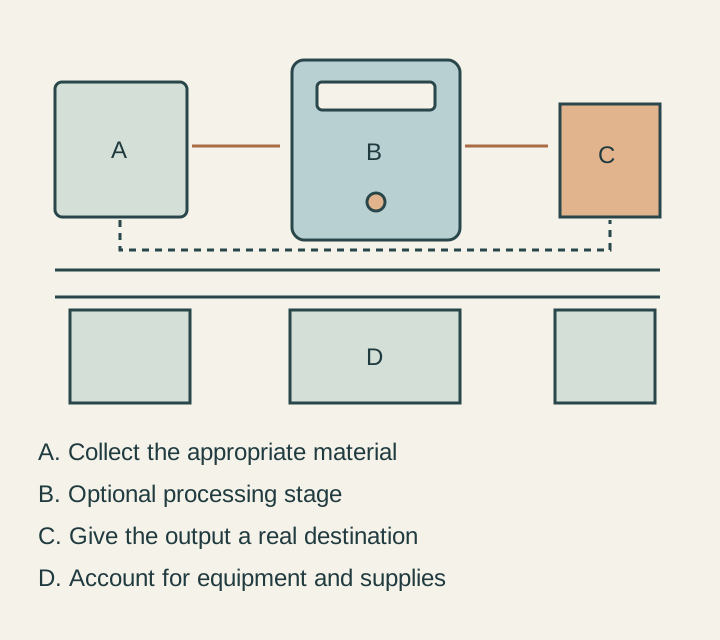
Compare the household's ordinary preparation and plate-clearing materials with the selected product instructions. Make separate assignments for the material outside the machine's permitted use. Packaging, excluded scraps and other categories still need the appropriate household arrangements.
The point of that comparison is purchase scope, not a new universal loading list. Similar-looking products and revisions need not accept the same material or use the same preparation. Keep the current instructions with the exact model rather than relying on a demonstration of another appliance.
Retaining a regular bin is not evidence that the processor has failed. It is evidence that the purchase adds a defined step for a defined stream. However, a proposal that removes the entire existing sorting cabinet must explain where all the remaining categories go before claiming recovered storage.
Follow a complete ordinary day
Describe collection before a cycle, the period when the machine is occupied, and what happens after the documented completion and handling conditions are met. Ask where additional suitable scraps wait whenever the selected machine is unavailable to receive them under its instructions.
Do not solve the waiting question by assuming unlimited buckets or uninterrupted loading. Identify any supplied or separately compatible parts that the plan actually needs. A removable receiving bucket and the machine body can also occupy different locations during a real routine; show both if that is the proposed arrangement.
Then follow emptying, cleaning or other care required for that product and returning the parts for the next use. Someone must be willing to do those jobs. If the appeal is having no container to handle, the full sequence may reveal that a processor purchases something different.
Reserve operating space rather than a storage silhouette
Place the selected machine in a documented operating location with its required support, connection, ventilation and access. Show the lid or removable parts in their required positions. The closed appliance's exterior rectangle is only the beginning of this drawing.
A cabinet where equipment fits while stored is not automatically a permitted place to run it. Keep a portable countertop product's operating arrangement distinct from a built-in appliance proposal. If it must move out for use, test the transfer with the regular user and give its cord and removed parts deliberate positions.
Show the rest of the countertop during that period. A processor that is available through a recurring part of the day can consume the surface intended for mixing, packing lunches or unloading groceries. Do not count the same area as continuously clear preparation space in the cabinet brief.
Compare the ordinary bin as a finished alternative
Select the direct-collection arrangement with the same care: receiving position, removable container, lid if chosen, emptying route and cleaning access. Fit the actual assembly in the intended cabinet or designate its freestanding location. An unspecified bucket in the aisle is not the proper comparison with a finished appliance plan.
A small preparation caddy can feed the established collection location without an electric stage. Its value depends on the household's willingness to transfer and empty it, just as the machine depends on its own owner routine. Include the supplies and storage needed for whichever arrangement will actually be used.
If a better-placed bin resolves the original complaint, price that improvement before assigning another surface to a processor. Conversely, if the household still wants the selected processing result after a good bin arrangement is offered, compare that genuine additional benefit.
Price the equipment and the continuing commitment
Include the selected machine, necessary compatible pieces, installation-related work and any cabinet changes. Identify the product's actual consumable and care requirements, with space for those supplies. Do not assume that a filter labeled refillable needs no replacement material or attention.
Use the household's expected use and current verified inputs if estimating ongoing cost. Keep uncertain energy use, future supply prices and replacement frequency visible as unknowns. A smaller-looking output does not by itself prove lower collection fees, a financial payback or a universal environmental advantage.
The competing cabinet function matters as well. If a proposed storage shelf becomes a machine parking place, move its actual contents somewhere checked. If the machine remains on the counter, accept the occupied counter. A hidden drawing does not create a free appliance position.
One family keeps the simpler route
In a hypothetical renovation, a household initially asks for a processor because the current scrap bin interrupts preparation. Its existing collection destination is workable, but the bin opens into the cook's standing position. Moving the receiving point and using a removable caddy solves that particular interruption.
The processor proposal still needs operating counter space, a destination for its output and a waiting arrangement when it cannot receive more material. The household does not particularly want that added stage once the access problem is solved. It keeps a complete direct-collection layout and retains the counter for lunch preparation.
Another household may choose the processor after confirming the intended output route, trying the physical handling and accepting its supplies and operating space. Keep those decisions with the cabinet plan. The machine earns its place when the whole routine is wanted, rather than when its body merely fits behind a door.
Sources & further reading
- Vitamix — FoodCycler Eco 5, processing and filter architecture