

Bath & laundry planning
James Martin at KBIS 2026: choose the useful configuration behind the display
Read James Martin's new-collection presentation as a shortlist of different bathroom arrangements, then choose the one whose actual components serve the room. A display can make a lower shelf, an organizer or an added makeup position look equally appealing. Their practical value depends on what the owner does there, what storage remains and which installation interfaces the selected configuration introduces.
Read James Martin's new-collection presentation as a shortlist of different bathroom arrangements, then choose the one whose actual components serve the room. A display can make a lower shelf, an organizer or an added makeup position look equally appealing. Their practical value depends on what the owner does there, what storage remains and which installation interfaces the selected configuration introduces.
Identify the functional differences before comparing room styling
The official recap identifies Allamari's illuminated lower shelf, a Kinnsden tool organizer in specified versions, and a coordinating Bellshire makeup counter.
Reading note: James Martin: KBIS collection recap.
Those features suggest different planning questions. Ask which exact version supplies the desired component and obtain its current product information. A collection-wide presentation can include arrangements that are not present in every individual model. Keep the selected model's actual component list separate from the wider program.
Use the display's wall treatment and accessories as an appearance reference only until they enter the project schedule. The useful shortlist describes the furniture and options under consideration, rather than treating everything in a styled room as a single purchase.
Let the lower area earn its role
For a proposed exposed lower shelf, place the actual items that will remain visible and test reaching them under normal basin use. Decide whether the owner wants display, frequently retrieved towels or another appropriate function. An empty shelf can appear generous while its real contents interfere with the person standing at the vanity.
Include any powered feature in the selected installation review. Identify the components, connection responsibility and access required by that exact arrangement. The cabinet buyer should know how ordinary attention is performed without assuming that a decorative lighting effect is a separate plug-in accessory or a reason to surrender usable access.
Match an organizer to a real personal kit
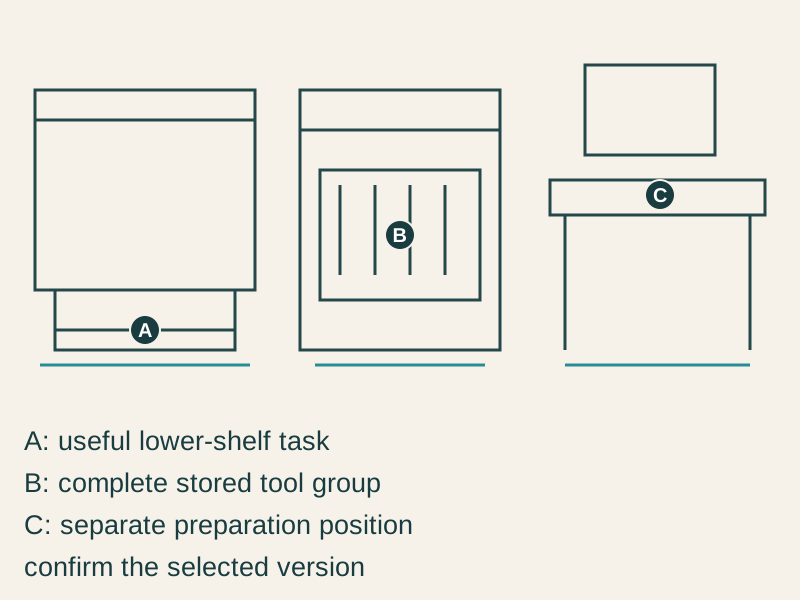
- A
- A: useful lower-shelf task
- B
- B: complete stored tool group
- C
- C: separate preparation position
Ask for the interior of the actual organizer-equipped version. Test the complete stored tools, including their cords, cases or attachments as applicable, in the condition their instructions permit for storage. An organizer feature is useful when the owner can retrieve and return the intended kit, rather than merely fit an appliance body into an opening.
Keep this decision about the furniture's supported purpose. It does not establish that an organizer is a suitable place to operate or cool a heated tool. Those stages need their own applicable product guidance. If the selected interior cannot accommodate the household's ready-to-store group, choose another configuration rather than ordering the organizer solely because it appeared in the presentation.
Make the makeup counter a complete working position
Represent the person at the proposed counter, the open grooming kit and the intended mirror. Include how the person reaches their belongings and how another bathroom user passes. A connecting surface can look useful in a long composition while failing to provide a practical place to sit or prepare.
If the makeup position changes the width or division of adjacent cabinetry, compare the resulting storage rather than retaining the original drawer allowance. The position should offer a real task that the owner wants to perform there. A repeated basin is not the only possible use of a longer bathroom wall, but an undefined extra surface is not automatically an improvement either.
Compare the same household in different arrangements
Imagine a shared bathroom where the recurring delay occurs when one person spreads grooming tools on the dry counter while another needs to wash. The owner has suitable storage for towels elsewhere and does not need another display shelf. This is a hypothetical selection exercise.
The team evaluates a separately defined makeup position as a way to move that dry task away from the basin. The proposed arrangement accommodates the user, mirror and open kit; its revised cabinets still hold the required belongings. The selected model and components are confirmed rather than inferred from a collection photograph. The owner chooses that complete arrangement.
If the room cannot support a useful preparation position, a simpler vanity and an appropriate tool organizer may better serve the same household. The presentation provides candidates; the actual room test determines which feature matters. It is not necessary to include every new feature to make a thoughtful purchase.
Keep finish and option decisions tied to the configuration
Review the selected finish through actual product information and samples where available, then coordinate the surrounding components. Do not infer a material specification or performance from a styled image. The order needs the finish and construction information for the identified product, not a description of how its photograph looks.
Resolve optional components before comparing quotations. An offer that lacks the working surface or accessory being evaluated is a different proposal. At the same time, do not assume that a featured component is an extra charge without checking the actual selected offer. Compare complete scopes using the real terms provided.
Turn the shortlist into an installation schedule
Retain the model, included components, assigned contents, working positions and reviewed installation responsibilities together. Identify who coordinates a change that affects the top, cabinet or powered features. A later substitution should preserve the functions that justified the selection, or return for review.
The useful lesson from the KBIS presentation is that bathroom furniture can support different activities through distinctly configured assemblies. Choose the feature that solves this room's recurring task, then buy the complete arrangement needed to use it. The designer's display remains inspiration; the owner's routine supplies the final brief.
Sources & further reading
- James Martin: KBIS collection recap