

Buying cabinets
In-home cabinet consultation or showroom visit: which to choose
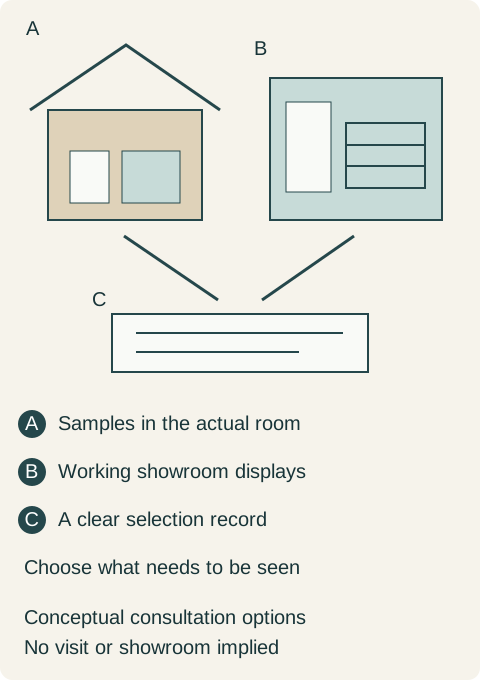
A home visit lets samples meet the actual room. A showroom can provide working cabinet displays that a portable kit cannot. Choose the appointment by what you still need to see, then confirm its scope.
Match the visit to the unanswered question
Choose an in-home consultation when the next decision depends on samples beside the actual floor, walls and retained materials, and the offered visit includes the people and samples needed. Choose a showroom appointment when you need to operate cabinets, compare complete interiors or examine a range that cannot reasonably travel. Sometimes the useful sequence is a showroom comparison followed by a smaller selection brought home.
The location does not establish what service you are buying. A sample presentation, design consultation and final measurement visit can take place in the same room without being the same assignment. Before scheduling, say what you want to decide and ask what the particular appointment will produce. This guide compares formats; it does not offer a home visit or showroom from usaKT.com.
Find out what actually travels
OnSite Cabinet Co.'s public description gives an example of a mobile showroom bringing cabinet and door samples to a jobsite. It establishes that consultation format, not the scope, availability or commercial terms of another provider.
Reading note: OnSite Cabinet Co. — public mobile showroom description.
Ask what will arrive: identified doors, finish chips, a working drawer, hardware or only printed material. A van described as a mobile showroom may carry a useful selection, but that name does not show whether your shortlisted mechanism can be operated. A consultant with a compact kit may have exactly what is needed to compare the last finish choices.
Send the shortlist beforehand. If the wanted door or hardware is not coming, decide whether a different appointment should happen first. Do not compare a substitute sample and later assume the desired product has been demonstrated. Keep sample identity separate from room inspiration photographs.
Use the actual room for what it can reveal
A home visit can put a door upright beside retained flooring, neighboring dining furniture and a countertop sample. It can expose a conflict that was hard to explain remotely, such as existing window trim meeting a proposed tall cabinet. Bring the real reference pieces into the comparison instead of showing unrelated saved kitchens throughout the appointment.
The room may not represent its finished condition. Demolition, temporary work lights, missing flooring or a planned wall color change what the samples are being compared with. Describe those changes. A sample chosen beside bare framing has been seen on site, but not necessarily in the material and lighting combination the household will use.
Ask how samples can be reviewed again when the relevant conditions are present. A permitted loan or later review may be useful, subject to the provider's terms. Photos can preserve which arrangement you discussed; they should not turn a temporary view into a guaranteed finished color.
Use the showroom to test a complete cabinet
Open the proposed type of drawer, follow the pullout's movement and inspect how front, box and hardware relate. Ask which displayed components match the quotation and which illustrate another option. A pleasing demonstration of different hardware is not evidence that the quoted configuration will behave identically.
Bring the items involved when the showroom permits it. A broad serving platter or intended countertop appliance makes a storage question concrete. If bringing the object is impractical, provide its dimensions and request the relevant usable interior. A full room display is valuable when it helps resolve an action, not simply because it looks impressive.
Agree who needs to attend and what decisions they can make. Avoid reopening a choice because an absent daily user later discovers that the door or operating motion was not what they imagined. Record any review that person still needs rather than announcing a completed decision.
Keep measuring responsibility separate
Ask whether the visit includes preliminary measurements, design work, a selection list or a final field check. Identify who supplies and verifies the dimensions used for the cabinet order. An on-site conversation does not automatically mean every concealed condition has been inspected or every appliance opening approved.
Prepare the same useful information for either format: labeled photos, the current plan, selected appliance documents and surfaces that will change. Showroom planning can proceed with known gaps identified. At home, the consultant should also be able to record an unresolved condition instead of filling it with an attractive assumption.
If the site is not ready for the promised work, reschedule that task or narrow the visit explicitly. Showing samples during construction may still be worthwhile. Calling that visit a final measurement approval would leave a different and consequential gap.
Compare the full appointment cost
Ask about consultation charges, travel limits, sample loans, repeat visits and whether any stated credit depends on a later purchase. Keep refundable amounts separate from fees. Terms vary by the actual offer; neither a home visit nor a showroom meeting is assumed free here.
Include the household's effort. A showroom trip may be inconvenient but resolve a working-hardware question that otherwise requires another appointment. A prepared home visit may finish a room-specific comparison without moving bulky retained materials. Compare the sequence needed to reach the decision, rather than whichever first appointment has the lowest visible charge.
A showroom first, then a narrow home comparison
Imagine a homeowner replacing cabinets while keeping a patterned floor. The unresolved choices are an unfamiliar corner-storage mechanism and the finish beside that floor. A mobile appointment can bring shortlisted doors but not a working corner assembly. This is hypothetical, not a description of a particular provider's inventory.
The owner first visits a showroom to operate the proposed mechanism and compare usable storage. After choosing the cabinet arrangement, the home meeting is narrower: compare identified finishes against the retained floor and furniture. The provider confirms how samples will be supplied, and the owner records the selected combination.
If the layout and mechanisms were already familiar, a scoped home comparison might be the only selection visit needed. Choose the format that answers the missing question. Leave with sample identities, decisions and open issues recorded, so another meeting continues the work rather than reconstructing it from memory.
Sources & further reading
- OnSite Cabinet Co. — public mobile showroom description