

Construction & materials
A lift mechanism inside the cabinet side or behind a cover: buy the cabinet construction
Fully integrated lift hardware changes the side-panel proposal, not just the visible cover. Compare the finished interior, panel preparation and service access before treating concealed hardware as a simple upgrade.
A fully integrated cabinet lift is a cabinet-construction choice, not simply a request for a smaller plastic cover. If the mechanism belongs within the side panel, the maker must supply a side prepared for that system and a finished interior consistent with the design. Compare the entire cabinet with the covered alternative. The useful question is whether the cleaner interior appearance justifies the particular manufacturing and future-service arrangement being proposed.
Blum’s US AVENTOS HKi brochure illustrates the distinction: the system can be fully integrated in the cabinet side or semi-integrated with cover caps. Its offer includes pre-milled raw-board and machining options. This is an existing product reference, not a new annual launch.
Reading note: Blum US: AVENTOS HKi fully integrated lift system.
Decide what the open cabinet should look like
Closed cabinet doors can conceal either approach. The difference becomes relevant when the interior remains visible during use, especially with display contents or a front through which the sides can be seen. Begin with that actual view rather than approving a concealed-mechanism label in isolation.
Ask for a completed cabinet example with the chosen door open and closed. Look at the side, shelf relationship and visible parts near the front. A buyer who mainly wants a calm exterior may gain little from changing the internal construction. Another who wants an unobstructed-looking interior may find the integration central to the design.
Neither preference establishes that one version is mechanically superior. Appearance, selected system performance and cabinet fabrication are different parts of the proposal. Keep the reason for choosing the embedded construction clear enough that a substitute can later be evaluated against it.
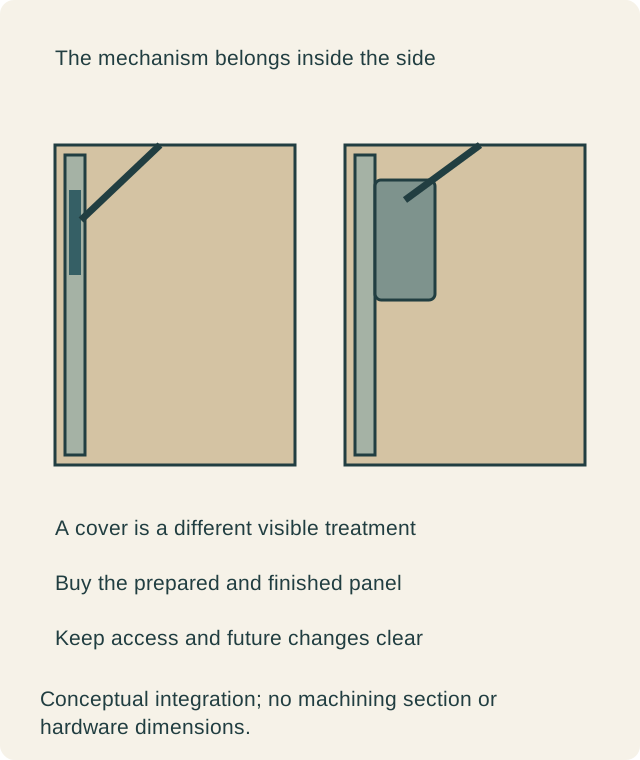
The side panel becomes part of the hardware decision
An embedded system cannot be specified only by naming the front. Have the maker identify the side-panel assembly, its preparation and the applicable system. The finished cabinet side may need to be considered before the provider commits to the material and facing arrangement.
This does not mean a buyer should invent a routing method. The manufacturer’s current planning and the cabinet maker’s selected process should control fabrication. The buying record should simply make clear that a properly prepared side is included, rather than leaving a hardware installer to discover an ordinary unprepared box at the jobsite.
Separate the structural side from a decorative end
If the cabinet sits at an exposed end of a run, identify both the side carrying the mechanism and the decorative face the room will see. A matching applied end can be part of the appearance proposal, but it should not be mistaken for evidence that the underlying hardware construction is resolved.
The same principle applies when a door-style end or a different facing is requested. Ask how the complete side will appear at the front edge, inside the cabinet and from the adjoining room. Approving a decorative panel alone cannot approve the mechanism enclosure behind it.
A cover can be a deliberate design answer
The covered option should be viewed as its actual finished proposal, not as an automatically inferior approximation. Its visible form and color may be acceptable beside the selected interior. If the household does not mind seeing the cover, it may prefer the cabinet construction offered with it.
Compare the versions under the same conditions. A photograph of an empty integrated cabinet beside a cluttered conventional cabinet is not a fair comparison of hardware appearance. Keep the door, contents and surrounding finish as consistent as the available examples allow, then decide which visible difference matters.
Integration does not erase the moving front
The side mechanism can be visually discreet while the door still needs a suitable opening path and reach. Resolve those requirements for the actual system and front. Do not assume that hidden hardware creates more clearance above the cabinet or makes a high open front easier for the user to reach.
Likewise, selecting a handleless appearance introduces its own opening proposal. Keep the quoted operating method and front construction together. The buying decision here concerns where the mechanism lives; it does not replace the separate review of front movement, weight and everyday operation.
Ask how adjustment and service remain possible
A cleaner interior should come with an understandable service route. Have the provider explain access for the selected completed assembly and who handles adjustment or a later component inquiry. Do not infer that fully integrated means permanently sealed, or that any replacement can be performed without attention to the panel.
Keep current system identification and the cabinet-side construction in the project record. A future technician should not have to infer the hardware from the door shape alone. If decorative parts cover an access location, the provider should explain that arrangement before it becomes the only visible evidence of the cabinet construction.
A hypothetical display cabinet selects the covered version
Imagine owners planning an upward-opening display cabinet. They initially request fully concealed hardware after seeing an attractive empty example. Their maker then shows the proposed completed interior and a covered alternative using the same general door appearance. With the shelves and intended display objects present, the owners find the cover unobtrusive.
In this hypothetical choice, they select the covered proposal because the completed view already gives them the calm interior they want. They do not ask the installer to conceal it later or pretend the two side constructions are identical. The order retains the actual cabinet and mechanism arrangement they reviewed.
Another household may decide the visible cover distracts from a transparent-front composition and choose the integrated side. That is equally coherent when the complete assembly and service route are defined. The new construction should earn its place through an actual view and use, not through the assumption that invisible always means better.
Changes to the cabinet need another look at the side
If a revision alters the side material, cabinet size or facing, ask the maker to confirm the selected system remains part of the revised proposal. A note saying the same lift is retained does not explain whether its prepared enclosure and front attachment are still included.
This is especially relevant when different parties supply the box and fronts. Name who supplies the prepared side and who completes the finish and hardware installation. The buyer needs a complete cabinet offer, not separate attractive components whose connection has not been assigned.
Buy the finished cabinet, not an integration promise
Record the actual system, full or semi-integrated version, cabinet-side assembly, visible-end treatment and applicable service information together. Keep the completed sample or representative view tied to that selection. Use current project supply information separately from an older technical brochure’s publication context.
The decision is ready when the household knows what it will see with the cabinet open, what side construction is included and how that assembly will be supported after installation. Those answers give concealed lift hardware a concrete role in the cabinet order.
Sources & further reading
- Blum US: AVENTOS HKi fully integrated lift system