

Design & industry
Formica’s 2026 Stones Collection: choose the vein direction that fits the kitchen
The new stone-look laminate program offers different kinds of movement. Compare the pattern across the real countertop and cabinet composition, then specify a complete fabricated top rather than treating the design name as stone identity.
Formica’s new stone-look collection gives a kitchen buyer several ways for the countertop to move visually. The useful decision is not simply whether a white stone pattern is attractive, but whether its direction and emphasis suit the actual cabinet arrangement. Compare the broad surface, exposed edge and neighboring materials as a composition. Then ask the fabricator to show the complete top it can supply in the selected design.
Formica identifies the program as its 2026 Stones Collection, including its 180fx and Formica Laminate families. Its descriptions contrast White Danby’s diagonal veining with Cristallo Quartzite’s horizontal golden-brown veins. These are laminate design identities, not natural-stone specifications.
Reading note: Formica US:2026 Stones Collection.
A pattern name describes the look, not a different material purchase
Keep the identified laminate product in the quote even when its name refers to marble or quartzite. A buyer can prefer the new visual without buying the stone that inspired it. The countertop construction and fabrication still need to be described as the actual offered laminate assembly.
This matters when comparing proposals. A photograph of stone and a laminate sample may suggest related colors, yet the finished edge, sink arrangement and installation scope are separate decisions. The new collection can keep a desired visual direction in the comparison. It does not make unlike materials or unfinished sheets equivalent purchases.
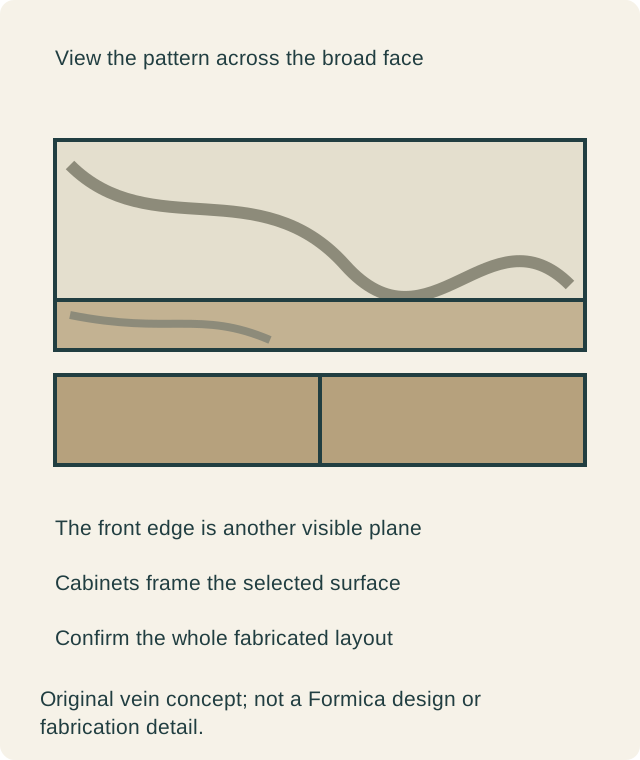
Look at the full movement before the small color variation
Use the provider’s available larger view to understand the proposed pattern. A small chip can help with the background color but may not show the movement that defines the design. Place the pattern beside an elevation or plan of the kitchen, with the intended viewing directions marked.
An island seen from the dining area presents a different composition from a short run viewed mainly while standing at it. Decide whether the veins should lead attention along the surface, cross it or remain less prominent. There is no universal rule that a long kitchen requires a particular direction. The room’s accepted composition, rather than a sample’s favorite corner, should decide.
Compare the new alternatives against the same surroundings
Hold the cabinet, floor and wall selections steady while reviewing candidate patterns. Otherwise a change in the supporting palette can be mistaken for a preference between the new designs. The goal is to identify which offered movement suits the kitchen the owners are actually planning.
Look from the seated position as well as from above. The countertop’s edge can remain prominent from a dining chair, while much of the broad face becomes less visible. A pleasing flat sample should not excuse an unresolved edge. Ask for a representative finished detail or the provider’s available way to review that part of the proposal.
The cabinet front should have a clear relationship to the pattern
Compare the selected movement with the door profile and hardware. A plain front may let the top lead; a detailed front may need a different balance. These are design choices, not rules that bar a certain style from the new collection. The buyer should be able to explain which element is meant to attract attention.
If the cabinet material also has a strong grain, review the group together. Trying to make unlike patterns look exactly identical can create an unnecessary problem. They may work better as clearly different materials, or the household may prefer to simplify one. A coordinated palette needs a chosen relationship rather than a promise that similar color names will match.
A hypothetical island changes the pattern, not the cabinet layout
Imagine owners who want a white stone-look top over a simple wood cabinet group. They compare the new diagonal and more horizontal movement using the available larger views. The first choice draws attention across the island in a way they find too assertive from the dining table. The other gives them the emphasis they prefer beside the retained floor and selected doors.
In this hypothetical review, they change the pattern while keeping the cabinet layout. The fabricator then presents the actual proposed top, including finished edges, openings and joints. The owners accept that complete arrangement. They have used a specific new visual alternative to improve the room, without assuming the laminate has become a natural slab or that the pattern decides its construction.
Another room may prefer the diagonal movement, or a quieter design elsewhere in the program. The valid result is the pattern the household likes in its actual view. The introduction is useful because it creates concrete options for that comparison; it does not prescribe the same surface for every kitchen using white and wood.
Vein direction must reach the fabricated proposal
Once the appearance is selected, ask the fabricator how it will appear on the actual parts. Keep the agreed direction and visible transitions in the layout review. Do not assume an unbroken pattern across separate pieces or a wrap at the edge unless the offered construction demonstrates it.
The same applies to any matching wall idea. A design can appear related across countertop and backsplash while the fabrication creates visible boundaries. Decide whether those boundaries are welcome and confirm the complete component scope. A collection image does not resolve the room’s joints, equipment openings or the way a return ends beside a cabinet.
Buy the completed top with its applicable care
The quote should include the substrate and finished details appropriate to the offered top, plus fabrication and installation responsibilities. Keep the sink arrangement identified if it is part of the selected proposal. Changing only the surface design should not silently remove an accepted component or replace it with an unspecified alternative.
Obtain the care information for the actual product and assembly. A marble-inspired name does not call for natural-marble maintenance, and a quartzite-inspired name does not justify borrowing another material’s instructions. The finished top should arrive with a clear product identity rather than leaving the owner to infer care from the decorative reference.
Keep the collection year separate from project supply
The official page establishes the named collection and its design descriptions. It does not establish an exact first-sale day or promise the current project’s chosen format. Confirm the selected design, finish and complete supplied assembly with the provider.
Retain the approved pattern view and finished-detail information with the cabinet and countertop drawings. If the fabricator proposes another layout or the household changes the cabinet surface, review the affected composition again. The buying result is a chosen new pattern that works across the actual top, edge and cabinet group, with the complete fabrication made explicit.
Sources & further reading
- Formica US:2026 Stones Collection