Clear acrylic or glass cabinet inserts: compare the complete door
Acrylic can reduce insert weight, but equal thickness is not equal stiffness. Compare the framed assembly, surface treatment and cleaning routine before substituting it for glass.
Choose clear acrylic for a display-cabinet insert when lower weight and its particular material properties improve the complete door, and the frame is designed for it. Keep glass when the selected glass assembly better meets the priorities for stiffness, surface resistance and ordinary use. Acrylic is not simply lightweight glass cut to the same outline. Nor is a transparent acrylic insert the same product as an opaque acrylic-faced cabinet board. The useful comparison concerns the actual clear panel, its exposed surfaces and the door carrying it.
Lighter sheet does not halve the whole door’s weight
ACRYLITE’s table lists 0.250-inch glass/acrylic at 2.9 and 1.5 pounds per square foot; acrylic is less stiff, and many glass cleaners are unsuitable for uncoated sheet. Use the weight entries as sheet values. Write the insert on one line of a comparison and the rest of the door on another. A substantial wood frame stays in the total even when the transparent sheet changes. The useful question is how much weight the completed door loses and whether that reduction improves the owner’s actual use.
Keep the panel’s span, support and acceptable movement in the decision. A lightweight panel that visibly flexes more than the owner accepts has not met the same requirement. Judge it as part of the offered frame, not as a loose swatch held up to a display. Equally, a satisfactory example in another setting is not a cabinet-door thickness rule. A shelf and a moving door do different jobs. The actual proposed assembly must meet this door’s intended use, so the choice cannot be completed by comparing transparent appearance and sheet weight alone.
An abrasion-resistant grade is a different surface choice
ACRYLITE’s Optical mar-resistant sheet has coating on one or both faces and permits ordinary glass cleaners. Its guide excludes deliberate gouging with sharp objects. For a display cabinet, follow how the family actually uses the door: someone wipes the outside after cooking, while someone else cleans the inside when rearranging dishes. Compare that routine with the proposed surface arrangement. The purchase should identify the front and reverse of the panel, so the owner accepts the treatment of the faces they will maintain.
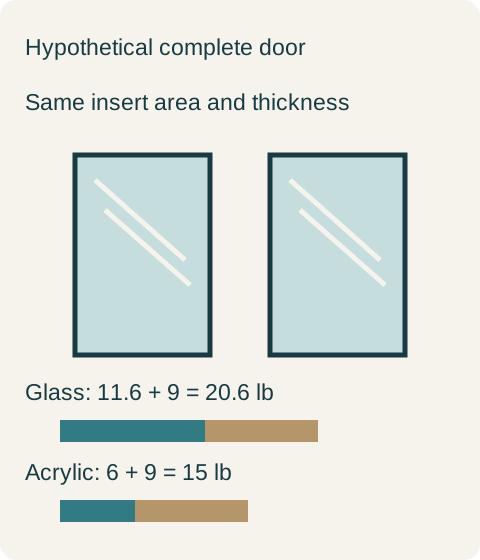
Teaching example Hypothetical area and frame weight, using ACRYLITE’s equal-thickness sheet-weight table. The comparison does not determine a cabinet’s required thickness, glass type, retention or hardware capacity.
Compare the weight saving with the use that matters
For a hypothetical comparison, an insert has an area of 4 square feet at the table’s 0.250-inch thickness. The reference weights give 11.6 pounds for glass and 6 pounds for acrylic. If the rest of the door weighs 9 pounds, the totals are 20.6 and 15 pounds. The owner sees a useful reduction, but the complete acrylic option is not half as heavy. In this frequently opened china cabinet, the accepted glass door already operates comfortably, and surface resistance during routine cleaning is the owner’s priority. The owner retains that glass assembly rather than choosing uncoated acrylic solely from the half-weight description.
These hypothetical totals are a comparison method, not measured weights for a supplied cabinet or a hinge rating. They assume equal insert area and thickness, and keep the other parts unchanged only to isolate the material difference. If the proposed acrylic assembly needs a different thickness, larger retaining parts or another frame, its real completed weight must replace that simplified result. An owner whose main problem is handling a heavy door could reach another decision by choosing a properly designed acrylic assembly, including its appropriate surface grade.
Movement allowance belongs to the acrylic assembly
ACRYLITE’s glazing guidance identifies greater thermal movement than glass. For a cabinet buyer, the practical implication is to consider the actual retaining detail with the selected sheet. A tightly fitted glass insert is not a complete drawing for its acrylic replacement. This does not establish a clearance to copy from this article. It identifies the part of the assembly that needs to be designed with the material. The buyer should receive a complete panel-and-frame proposal rather than a new sheet name written over the old one.
Movement accommodation and reliable retention are simultaneous requirements. Leaving a panel loose without a proper design is not the same as providing controlled room for expansion; clamping it rigidly simply to stop a rattle can defeat the intended allowance. At the purchasing stage, the completed frame detail is the useful evidence. For the hypothetical china cabinet, retaining the already accepted glass assembly also avoids treating a material change as a drop-in part replacement when no acrylic assembly has been selected.
Care instructions follow the exact surface
Keep the selected panel’s care instructions with the household’s cabinet information. The family needs a usable routine for the door it bought, not an assurance that all transparent panels are maintained alike. In the example, the existing glass choice meets the owner’s priorities. A future change to another material would mean accepting that particular surface and care routine, rather than remembering a cleaning permission read for a different product. A material name on its own cannot tell the next person cleaning the cabinet what the assembly contains.
Inspect the transparent sample against the actual display contents and lighting, then judge its edges and reverse side in the finished frame. That visual assessment complements the material comparison; it does not establish the required thickness or safe retention. The owner in the example retains glass for a cabinet whose handling already works, while recognizing the genuine insert-weight benefit of acrylic. A different project may value that benefit enough to specify a suitable coated acrylic and a compatible frame. The completed decision should name which material, surface grade and assembly deliver the priorities, rather than selecting by a single weight claim.
Pure White
Cream White
Light Warm Gray
Gray
Navy
Black
Oak Tone
Dark Walnut Tone
Design study These finish studies are design references, not a list of currently orderable colors. Screens and lighting change the appearance; compare a physical sample before choosing.See all finish options →
A cabinet color that looks warm online can read differently next to your floor. Compare an identified physical sample in the positions and lighting where the cabinets will live.
Compare the actual countertop products, heat-source routine and fabrication proposal. A fired porcelain slab and resin-bound quartz are different materials, but neither label replaces a complete kitchen specification.
The sample shows the door frame, a separate center panel, the face frame and the cabinet box. Each component has its own place in this Shaker construction.
Shaker construction: door frame, center panel, face frame and cabinet box. The cutaway helps locate these parts; confirm each material in the specifications for the selected cabinet.
01 / Door frame
The Shaker door has rails and stiles around a separate center panel. The frame and center panel are different components; confirm their materials in the specifications for the selected cabinet.
02 / Face frame
The face frame surrounds the opening at the front of the cabinet box and sits behind the doors. The face frame, door frame and cabinet box are separate parts.
03 / Cabinet box
The sample exposes the cabinet sides, interior surfaces and layered edges. The image does not establish the wood species or material specification of a selected cabinet.