Do cereal containers save pantry space compared with the original boxes?
Sometimes, but equal food volume does not mean equal shelf footprint. Compare the outside shape, lid and leftover package before buying matching containers.
Replacing cereal boxes with matching containers does not automatically save cabinet space. A sturdy container may pour more conveniently or make the contents visible, while occupying more shelf area than the original package. Judge the whole arrangement: container, lid, hand access and any cereal left in the refill bag. The useful choice depends on your actual purchase sizes and breakfast routine.
Compare outside dimensions before comparing volume
Use the widest outside points, including handles, hinges and latches. A container’s stated food capacity describes its interior, not the rectangle it occupies on a shelf. Rounded shapes can leave unused gaps, and a broad lid may determine spacing even when the body narrows below it. Measure at the widest level rather than only at the base.
For a hypothetical comparison, a box measuring 8 by 3 inches occupies a 24-square-inch footprint. A container requiring a 6-by-6-inch planning rectangle occupies 36 square inches. The container uses more floor area in this example; the numbers do not claim equal food capacity or represent a particular product. Height and usable contents must be checked separately.
Include the breakfast movement
Imagine taking the container out, opening the pouring feature and filling a bowl. Test the handle and the loaded weight for the person who will use it. A wide container may be easy to store but awkward to control, while a tall one may require a different shelf position to be removed comfortably.
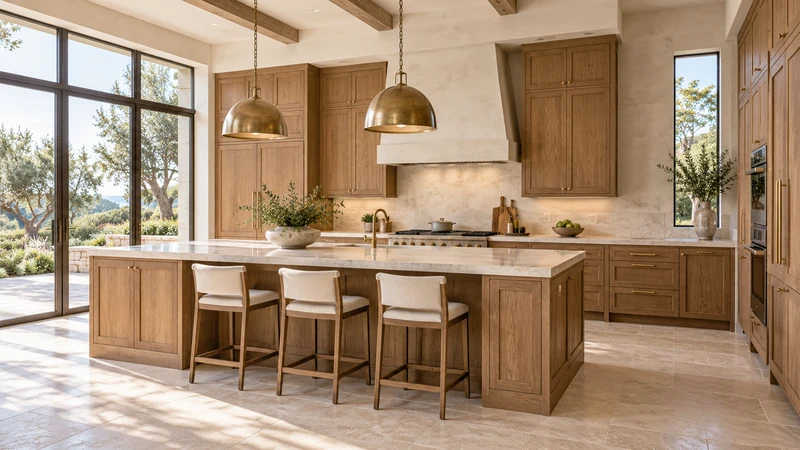
Design study The storage choice should match the route to the breakfast work surface. The image does not identify cereal containers or establish their dimensions.
If you intend to pour in place, check the actual motion rather than leaving the container wedged behind a shelf lip. If you will set it on the counter first, reserve a suitable landing area. Keep the lid or closure operation in the trial. An empty container held with an open lid does not reproduce the everyday task.
Account for the portion that does not fit
Compare the amount you buy with the container’s usable capacity for the intended food under its instructions. If a newly opened package does not fit completely, the remaining bag still needs an appropriate identified location. A matching row can appear more organized while creating a second, less visible reserve area that the plan never counted.
Retain the product identity, dates and relevant packaging information when transferring food. Do not combine different packages merely to avoid visible leftovers. Follow the food and container storage directions and keep cleaning and preparation of the container within its manufacturer’s instructions. A cabinet layout does not determine food suitability or storage life.
Try the routine with a limited selection first
Compare the original closed package with the intended container using the same shelf and ordinary hand access. Consider whether a smaller selection of containers for frequently used products would help while occasional cereals remain in their packaging. You do not need to convert every product to justify using a container where it solves a real problem.
Record the widest outline, removal height, pouring location and refill remainder before choosing shelf spacing. Then compare the complete occupied arrangement with the original packaging. The outcome may be better pouring rather than space saved, and that can still be a valid reason to choose it—as long as the cabinet plan reflects the tradeoff.
Pure White
Cream White
Light Warm Gray
Gray
Navy
Black
Oak Tone
Dark Walnut Tone
Design study These finish studies are design references, not a list of currently orderable colors. Screens and lighting change the appearance; compare a physical sample before choosing.See all finish options →
The reserve supply and the working supply have different jobs. Plan the path between them before assigning every large package to the kitchen’s easiest shelves.
The sample shows the door frame, a separate center panel, the face frame and the cabinet box. Each component has its own place in this Shaker construction.
Shaker construction: door frame, center panel, face frame and cabinet box. The cutaway helps locate these parts; confirm each material in the specifications for the selected cabinet.
01 / Door frame
The Shaker door has rails and stiles around a separate center panel. The frame and center panel are different components; confirm their materials in the specifications for the selected cabinet.
02 / Face frame
The face frame surrounds the opening at the front of the cabinet box and sits behind the doors. The face frame, door frame and cabinet box are separate parts.
03 / Cabinet box
The sample exposes the cabinet sides, interior surfaces and layered edges. The image does not establish the wood species or material specification of a selected cabinet.