Cabinet backs: separate the closing panel from the attachment details
Read the rear-panel construction and mounting information separately so an attractive interior back does not stand in for the cabinet’s installation requirements.
Compare a cabinet back as part of the whole case, not as an isolated sheet. Identify the rear closing panel, any rails or other attachment components, and any decorative facing. Then obtain the installation details for that exact cabinet. A back that looks thick from inside does not establish where fasteners belong, and a thin-looking closing panel does not describe every part behind it.
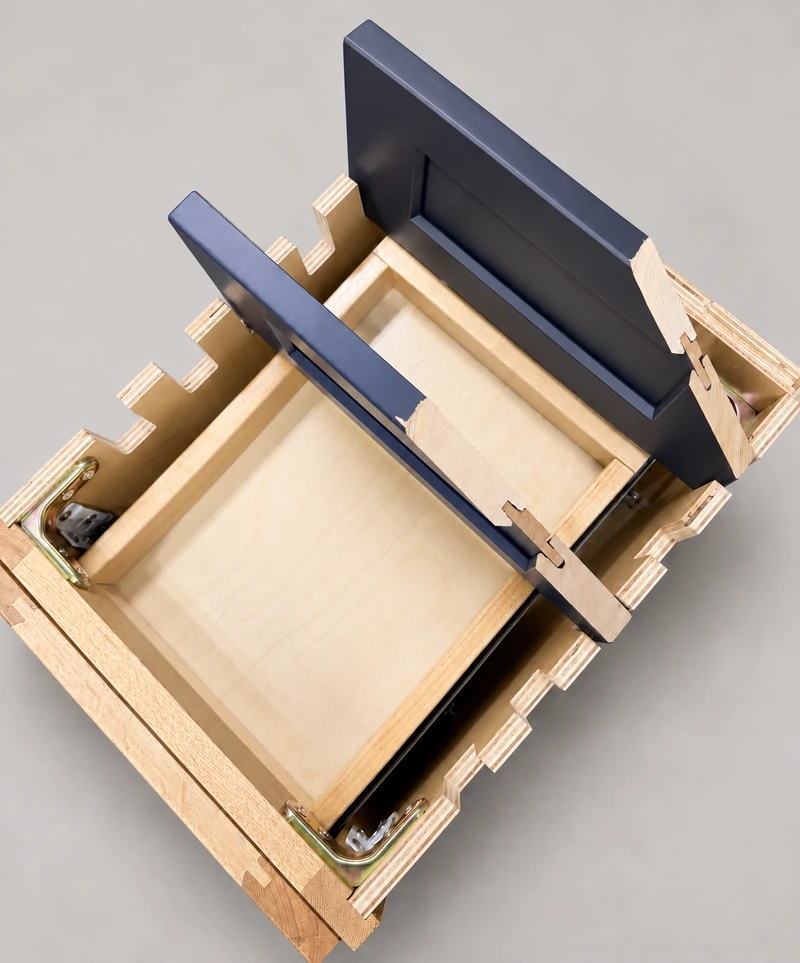
Physical sample Separate the visible case from the painted front pieces when reading a construction description. This cutaway does not show an approved wall-attachment arrangement or establish the rear-panel specification.
Name the pieces before comparing thickness
American Woodmark’s construction example lists captured back panels and hanging rails separately. That distinction illustrates why “the back” may not be a complete construction description. It is not a usaKT.com specification.
Ask for a section drawing or an identifiable rear view of the quoted case. Find the panel that closes the cabinet interior and the components designated for installation. If an additional finished panel covers the back, list it separately. Use the names from the manufacturer’s drawing so the seller and installer can discuss the same pieces without relying on what is visible from the doorway.
Read material and connection together
A useful description names the rear-panel material, specified thickness and relationship to the sides, top and bottom. Ask how the panel is retained and whether the construction differs among cabinet types in the order. The answer for a base cabinet should not automatically be copied to a wall or tall cabinet merely because they share a finish.
Avoid ranking the cabinet by back thickness alone. A thicker decorative layer may change appearance without changing the manufacturer’s attachment arrangement. Conversely, a closing panel can be only part of an assembly that has separate installation members. The relevant question is whether the complete specified assembly is suitable for its intended use and whether the installer has its instructions.
Keep service openings out of the attachment guesswork
Before ordering a cabinet that needs openings for existing services, document where those services enter and ask the installer to review the proposed cabinet construction. A convenient place to cut from the room side may coincide with a component the manufacturer expects to remain intact. Do not assume that any flat area at the back is available for cutting.
Have the responsible professional identify the planned openings and reconcile them with the cabinet instructions and site conditions. This guide does not provide a cutting pattern, fastener schedule or wall-support design. Its purpose is to make sure the purchase description contains enough information for that review, before a delivered part is altered and difficult to return.
A worked comparison of vague and useful quotes
Imagine one quote advertises a “full back,” while another identifies a rear closing panel and separate attachment components. The first phrase may sound more substantial, but it leaves unanswered what material is used, how it connects and where the installer is expected to work. Request those details from both suppliers before judging the difference.
Now imagine an added decorative rear panel on a cabinet visible from the adjoining room. Confirm whether it is included in the overall depth shown on the drawing and how its exposed edges are finished. It may be an important appearance choice while leaving the underlying case construction unchanged. Record both decisions instead of treating the decorative option as an automatic structural upgrade.
Approve a back description that can be checked
Retain the cabinet type, rear-panel description, relevant section or rear view, decorative additions and the installation document version. Mark unresolved service-opening questions on the project copy, with the person responsible for resolving them. A verbal statement that the cabinet is “strong enough” does not replace these identifiable details.
At receiving, compare the labeled cabinet with the approved construction information before cutting the back. Photograph an unexpected opening, missing component or damaged rear area with enough context to show its location. Ask for a product-specific assessment when the delivered construction differs. That sequence lets the installer work from the right cabinet information and gives the buyer a clear basis for resolving discrepancies.
Pure White
Cream White
Light Warm Gray
Gray
Navy
Black
Oak Tone
Dark Walnut Tone
Design study These finish studies are design references, not a list of currently orderable colors. Screens and lighting change the appearance; compare a physical sample before choosing.See all finish options →
A painted door, a wood-grain side and a plywood cabinet box can belong to the same cabinet. Here is how to read those parts, what the sample photos actually show, and which details to put on a quote.
Locate and document a painted joint line, distinguish an appearance change from looseness or damage, and request an assessment before filling or repainting.
The sample shows the door frame, a separate center panel, the face frame and the cabinet box. Each component has its own place in this Shaker construction.
Shaker construction: door frame, center panel, face frame and cabinet box. The cutaway helps locate these parts; confirm each material in the specifications for the selected cabinet.
01 / Door frame
The Shaker door has rails and stiles around a separate center panel. The frame and center panel are different components; confirm their materials in the specifications for the selected cabinet.
02 / Face frame
The face frame surrounds the opening at the front of the cabinet box and sits behind the doors. The face frame, door frame and cabinet box are separate parts.
03 / Cabinet box
The sample exposes the cabinet sides, interior surfaces and layered edges. The image does not establish the wood species or material specification of a selected cabinet.