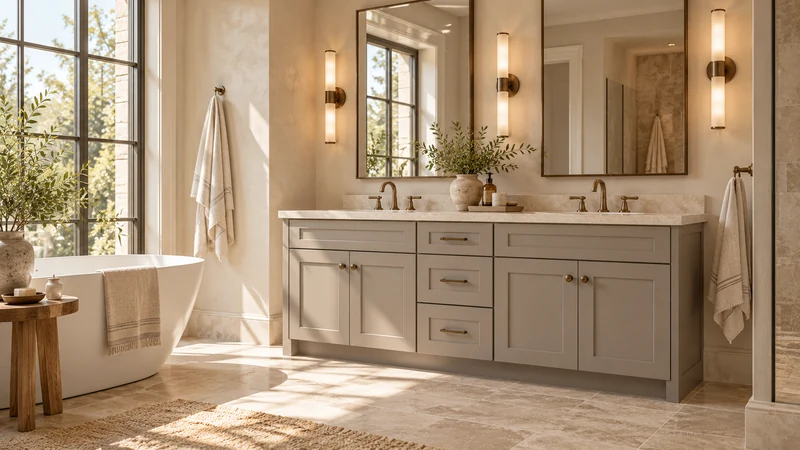
Round, oval and rectangular are convenient shopping labels, but they describe only part of a basin. Models with a similar outline can have different interior slopes, bottom areas, rims and depths. Start with the washing task that matters in your bathroom. Then compare the actual opening and section, the faucet relationship and the cabinet consequence. This produces a more useful choice than assuming a geometric style is inherently easier to use.
Describe the action before comparing shapes
For a frequently used bathroom, consider how the household washes hands, rinses the face or handles a washcloth. Notice where hands move and whether a container is ever placed inside the bowl for an ordinary permitted use. For a powder room, the relevant routine may be much simpler. Do not judge either room by a staged photograph in which the bowl is empty and no one is using it.
Use an actual sample where available, or a full-size outline of the opening at the proposed location. An outline can help compare hand position and nearby landing space, but it cannot reproduce depth or the way water behaves. Keep those limitations explicit. A dry mockup that feels comfortable is useful evidence for reach, not proof that a basin will be splash-free.
Design study Design study: the visible basin opening is only part of the choice; interior slopes and the space below require the selected product drawings.
Read the bowl as a shape in depth
Distinguish overall dimensions from the interior opening and the useful area lower in the bowl. A wide rim can make a product look broad while leaving a smaller opening. Sloping sides can change how much space remains around hands or an object near the bottom. Look at the section drawing or the physical basin rather than estimating these relationships from the top view alone.
Consider how you would reach the corners, rim and drain area during cleaning, following the selected product's care guidance. Avoid assuming every rectangular basin has sharp corners or every oval basin is easy to wipe. The actual curves and transitions matter. If you cannot inspect them in person, ask for a clear close-up and section before treating the shape label as a reliable description.
Work through a task-based comparison
Imagine a hypothetical choice between an oval basin with a broad rim and a rectangular basin with a more open interior. Both fit the proposed cabinet and counter outline. The household often rinses a washcloth and wants room to turn its hands without bumping the sides. A full-size comparison favors the more open interior for that movement, while the broad-rim option leaves a different arrangement for nearby supplies.
Next, the section review shows that the favored basin extends farther into the cabinet and conflicts with the preferred upper drawer. The buyer now has a real decision: accept a compatible drawer configuration, choose another basin with a different section, or prioritize the storage over the extra working room. The rectangular label did not decide the purchase; the observed task and the interior tradeoff did.
The same comparison may produce a different answer in a guest powder room where handwashing is the main use and a compact opening leaves a helpful landing area. That does not make either shape generally superior. It means the selection is tied to the room's intended job and the exact products being considered.
Confirm the whole washing position
Evaluate the basin with the selected faucet position and the person standing at the cabinet. A comfortable bowl can still be awkward if the outlet occupies the space where hands need to move or the washing position requires an inconvenient reach. Where a working display is available, use it according to the provider's rules and remember that a different faucet arrangement can change the experience. Do not infer performance from bowl shape alone.
Record the chosen basin model, the useful interior features and the cabinet configuration that accommodates it. Keep separate notes for what was physically tried, what was checked on drawings and what remains unknown. Before ordering, confirm that the preferred routine, counter landing space and drawer arrangement can coexist. The best basin shape for the project is the one whose actual geometry supports those choices, rather than the shape with the most persuasive photograph.
Pure White
Cream White
Light Warm Gray
Gray
Navy
Black
Oak Tone
Dark Walnut Tone
Design study These finish studies are design references, not a list of currently orderable colors. Screens and lighting change the appearance; compare a physical sample before choosing.See all finish options →
Make the change when the proposed single-basin layout offers a specific daily benefit and the treatment of existing services is resolved before cabinet selection.
The sample shows the door frame, a separate center panel, the face frame and the cabinet box. Each component has its own place in this Shaker construction.
Shaker construction: door frame, center panel, face frame and cabinet box. The cutaway helps locate these parts; confirm each material in the specifications for the selected cabinet.
01 / Door frame
The Shaker door has rails and stiles around a separate center panel. The frame and center panel are different components; confirm their materials in the specifications for the selected cabinet.
02 / Face frame
The face frame surrounds the opening at the front of the cabinet box and sits behind the doors. The face frame, door frame and cabinet box are separate parts.
03 / Cabinet box
The sample exposes the cabinet sides, interior surfaces and layered edges. The image does not establish the wood species or material specification of a selected cabinet.