A painted door can look like a frame surrounding a recessed center without actually being assembled from separate frame parts. To compare a routed single-piece door with an assembled door, ask for the construction description and look at a complete finished sample. The useful choice is between specific products with known details, including their edge profiles, joints, proportions and service options.
Physical sample Physical sample for comparing faces and edge transitions. It does not establish the construction of either door option discussed here.
Start with the construction behind the shape
A routed single-piece design creates its face profile within a panel. An assembled frame-and-panel design uses separate components. Ask what makes up the frame, center and outer edges, rather than deciding from a style name. A familiar recessed-panel appearance can describe the look without explaining how the door was manufactured.
Conestoga, for example, describes hybrid doors that combine a solid-wood frame with an MDF center panel. That example shows why “assembled door” does not necessarily mean every component is solid wood. It does not identify the construction of another supplier’s door. Obtain the actual description for the option being quoted.
Compare the intersections, not just the flat center
Study where the vertical and horizontal frame shapes meet. On a routed sample, look at the inside corners, transitions and the way the profile finishes at each intersection. On an assembled sample, examine the frame joints and the transition into the center. These details can create different shadow lines even when both doors are sold under a similar style description.
View the sample upright and at the distance from which you will normally see it. Then inspect it closer without treating every visible line as a defect. Ask which lines belong to the design, which come from component joints and what the supplier considers an unacceptable finish problem. A flat color chip cannot answer those questions.
Decide how you feel about visible joint lines
American Woodmark explains that wood movement can produce visible joint lines in its painted cabinetry. That is useful background when considering an assembled wood frame; it is not a ruling on the condition of any particular door or another company’s warranty. Ask the seller to explain its own appearance expectations using the construction you are considering.
A single-piece face removes the particular frame-to-frame assembly joints that are absent from its construction. It does not establish immunity from damage, finish defects or all movement. Avoid choosing it on a vague promise that it can never crack. Compare the actual product documentation and handling requirements, especially if the supplier changes the panel or construction for larger sizes.
A worked comparison of the same painted style
Imagine that you like a narrow painted frame shown in a photograph. The routed sample has rounded internal transitions you notice in side light. The assembled sample has sharper-looking intersections but visible frame joints when viewed closely. Neither observation tells you that the door is badly made; they identify details that may matter to your preference.
Set the samples beside each other in the intended finish. Compare the exact profile and ask for a drawing or representative example of the door sizes in your order. If a small drawer front uses a different treatment, review it as part of the same selection. Approving a large door alone can leave a conspicuous difference unresolved.
Approve a whole door family and record the choice
Confirm front and reverse finishes, outer-edge treatment, hardware preparation and the construction of any matching pieces. Ask how a damaged component would be evaluated and whether the usual remedy concerns the entire door. An assembled appearance does not automatically mean the supplier can replace a center panel separately after the door has been finished.
Keep the construction description, profile reference, approved sample identity and agreed appearance expectations with the order. At receipt, compare the actual door family with that record before installation or modification. If a joint or profile differs, photograph the complete front and the detail, then request an assessment. The specification should explain what you selected without relying on the word “painted” to describe every part of the door.
Pure White
Cream White
Light Warm Gray
Gray
Navy
Black
Oak Tone
Dark Walnut Tone
Design study These finish studies are design references, not a list of currently orderable colors. Screens and lighting change the appearance; compare a physical sample before choosing.See all finish options →
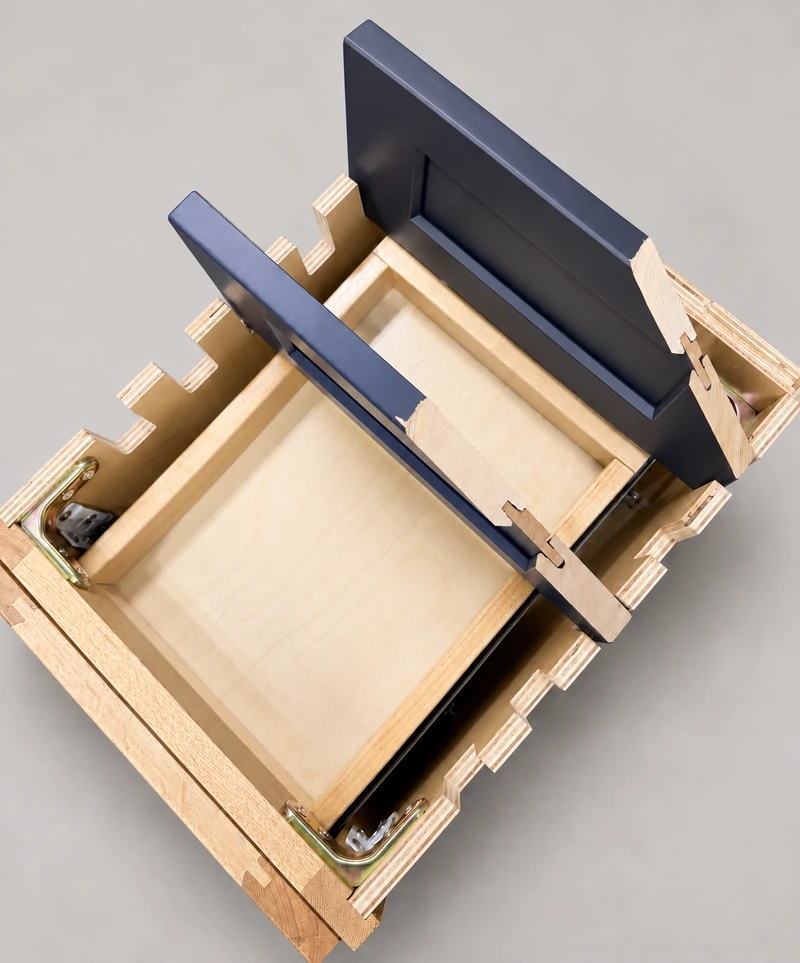
A painted door, a wood-grain side and a plywood cabinet box can belong to the same cabinet. Here is how to read those parts, what the sample photos actually show, and which details to put on a quote.
The sample shows the door frame, a separate center panel, the face frame and the cabinet box. Each component has its own place in this Shaker construction.
Shaker construction: door frame, center panel, face frame and cabinet box. The cutaway helps locate these parts; confirm each material in the specifications for the selected cabinet.
01 / Door frame
The Shaker door has rails and stiles around a separate center panel. The frame and center panel are different components; confirm their materials in the specifications for the selected cabinet.
02 / Face frame
The face frame surrounds the opening at the front of the cabinet box and sits behind the doors. The face frame, door frame and cabinet box are separate parts.
03 / Cabinet box
The sample exposes the cabinet sides, interior surfaces and layered edges. The image does not establish the wood species or material specification of a selected cabinet.