

Buying cabinets
KitchenAid at KBIS 2026: what the camera, filling and rack relaunch means for cabinets
Read the complete kitchen relaunch through the tasks it changes. Separate information features from oven, refrigerator and washing capacity before committing the cabinet package.
The relaunch creates a comparison, not an automatic cabinet upgrade
KitchenAid's KBIS kitchen relaunch gives a cabinet buyer a useful reason to compare assisted tasks across the room. It also creates a risk of letting an attractive feature settle an unrelated space decision. Wanting to look into an oven remotely does not establish how much oven capacity the household needs. Wanting a different filling routine does not determine the refrigerator's surrounding cabinets.
Use the program as one coordinated product conversation. Decide which changed task matters, select the actual equipment that supports it and then price the affected furniture. There is no need to replace an otherwise satisfactory category simply to reproduce the whole event presentation.
Keep the announcement's scope intact
KitchenAid's February 10, 2026 release presents a double wall oven with a cooking camera, French-door refrigeration with exterior automatic filling, and a third-rack dishwasher. Its phone-viewing feature requires Wi-Fi and an app.
Reading note: Whirlpool Corporation — KitchenAid kitchen relaunch at KBIS 2026.
The feature group is the news. A current quotation still needs exact models, versions and installation documents. This article adopts neither promised cooking outcomes nor comparative washing and drying claims from the promotional release. The useful next step is to test what the household will actually do differently.
Oven information and oven space answer different questions
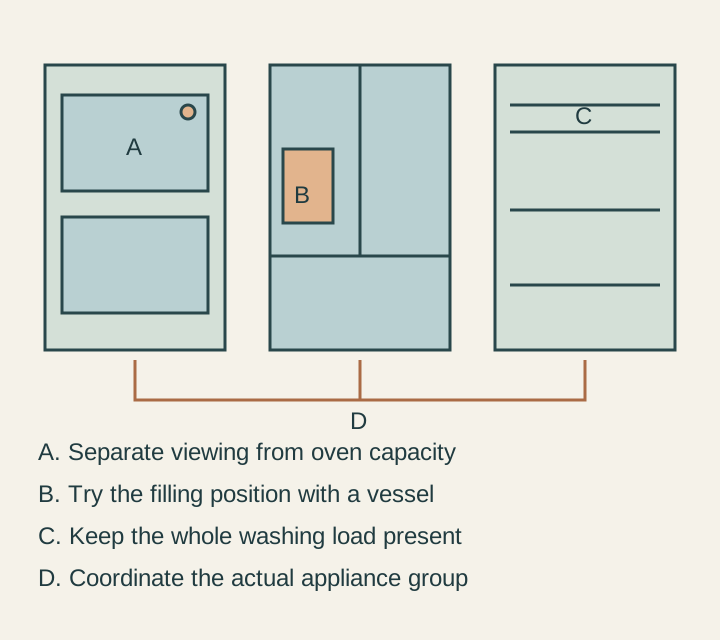
For a buyer interested in viewing, ask the product demonstrator to show the actual supported display and phone sequence. Identify where the regular cook expects to check information. A phone demonstration at a sales desk is different from using the appliance display while preparing another part of dinner.
Then set the camera feature aside long enough to compare the household's pans, dishes and simultaneous cooking needs. The proposed tower must still justify the cavities and the storage it replaces. Do not buy more fixed oven space solely because a desired information feature appears in that offered configuration.
The reverse can also be true. A household that already needs the proposed oven arrangement may value the additional view after testing it. The cabinet decision is stronger when those reasons remain distinct: useful physical capacity first, a wanted interface alongside it, and the actual installation coordinated with both.
Connectivity belongs in the ownership choice
If phone viewing is important, have the household try the documented setup and ordinary access on the equipment being offered. Establish who will use it and whether that routine is acceptable. Do not substitute a general preference for smart appliances for a demonstration of the selected function.
Keep the installation relationship practical. A cabinet door cannot cover a control or access point simply because a phone can show information elsewhere. The appliance's mounting, ventilation, opening and service provisions remain tied to its documents. Remote access does not turn the tower into ordinary closed storage.
A buyer who does not want the required phone routine should price the product on the functions they do intend to use. There is no need to assign value to a feature merely because it is prominent in the relaunch.
Filling changes a recurring stop at the refrigerator
For the refrigeration candidate, bring representative clean vessels to an appropriate demonstration. Test the actual supported placement and retrieval. Observe whether the user wants to fill there while someone else approaches food storage, and where the filled vessel goes next.
The cabinet drawing should retain a usable approach during that task. Nearby pantry fronts, an island edge and the refrigerator's other movements can all participate in the same busy moment. A closed elevation cannot show the overlap.
Keep the water-filling trial separate from the food-storage trial. The actual grocery load, fresh and frozen allocation and internal arrangement still need to work. Do not compensate for an inconvenient interior by adding another refrigeration appliance without pricing the space and cabinet consequences of that larger plan.
The upper rack must help the whole load
For the dishwasher candidate, use the ordinary mix of bowls, cups, utensils and serving pieces in a suitable inactive loading trial. Place the intended upper group and keep everything else present. A convincing upper arrangement does not establish that the lower items fit at the same time.
Observe which pieces move out of the old basket or lower rack and whether the new position suits their actual shape. Keep the selected product's loading guidance controlling. This is a physical allocation exercise, not an independent washing or drying test.
Then open the neighboring cabinets. The selected machine should coexist with the drawers holding the clean items it receives. If a proposed front or installation changes that relationship, revise the actual cabinet plan rather than relying on the earlier suite image.
Price the changes that survive the trials
Prepare an itemized equipment list and a furniture list. For each selected product, show the opening, required finishing pieces and installation scope. Identify any storage displaced by a tower or changed refrigerator surround, and give those objects real checked positions.
Separate unchanged work from work created by the relaunch choices. A new camera does not itself authorize a new cabinet tower; a new rack does not itself require new adjacent drawers. Quote the changes the chosen complete installation actually needs.
Also distinguish the manufacturer's program from a seller's offer. Package contents, current supply and any commercial terms need their own current written confirmation. The announcement does not establish a USA KITCHENS & TOPS assortment or a finished installed price.
One household keeps the valuable part of the program
In a hypothetical remodel, the owners already need the proposed oven arrangement and find its supported viewing routine useful. Their checked pans fit, the tower's displaced serving pieces fit a planned dining cabinet, and the full installation can be coordinated. They retain that candidate.
The refrigerator's filling demonstration is appealing, but its particular food arrangement does not suit the household. They choose another viable refrigerator instead of adding a second cold-storage unit to rescue the first choice. Their ordinary dishwasher load also determines whether the proposed rack arrangement earns a place.
The finished kitchen can therefore adopt a meaningful part of the relaunch without purchasing every demonstrated change. Another household may find that the whole offered group passes. The cabinet package should express those actual decisions, with the source announcement preserved as context rather than treated as the room's installation specification.
Sources & further reading
- Whirlpool Corporation — KitchenAid kitchen relaunch at KBIS 2026