

Design & industry
FENIX NTX in 2026: new wood-inspired faces and familiar colors on a new material platform
The June introduction expands the design language of the matte surface family. Review NTX as the identified surface in a complete cabinet front, especially when a familiar color name might conceal a change of product.
FENIX NTX expands the cabinet conversation in a useful way: a buyer can investigate wood-inspired appearance within a matte surface family, while familiar solid colors also appear on a new material platform. Those are related choices, but neither should be reduced to a color-chip substitution. Specify NTX as the actual proposed surface, see it on the complete offered front and compare the edge and companion parts that will finish the room.
Formica’s announcement, dated 2026-06-16, introduces FENIX NTX as a new bio-based material platform with an ultra-matte, soft-touch approach. It adds the brand’s first wood-inspired designs alongside familiar solid colors.
Reading note: Formica: FENIX NTX introduction, June16,2026.
The wood-inspired option changes what can be compared
If a project likes the feel and low-reflection appearance of its proposed matte surface but wants a wood visual, this introduction creates a specific new sample request. Ask for the actual offered design in the relevant front proposal. Do not substitute a photograph of natural wood or a sample from another material as though it demonstrates the new product.
The buyer can compare this option with natural veneer on its own terms. A wood-inspired face is not a claim that the cabinet is made from the pictured species. Decide whether the intended result is a wood visual, an actual species or a particular feel. Clear priorities make it possible to accept the new format without misdescribing what it supplies.
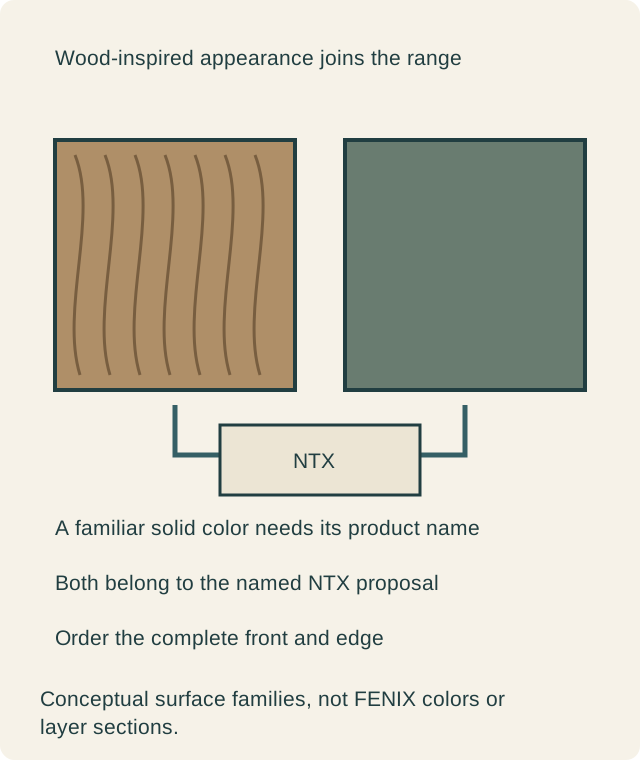
View and touch are separate reasons for choosing
Look at the actual sample upright in the room, then handle it as permitted by the provider. Decide whether the pattern and surface feel work together in the intended location. A favorable photograph cannot establish touch, while a pleasing small sample cannot fully describe a broad cabinet group.
Use normal viewing positions, including a seat beside the island if relevant. The proposed wood visual may be a main field or a smaller accent. Either can work if deliberately selected. Do not promise that the same sample will look identical under every light, or that a matte appearance by itself establishes a scratch or maintenance advantage.
Familiar color names need a material identity
When the provider offers a familiar solid color in NTX, keep both the color and product name in the proposal. A shared color name can help begin comparison, but it does not prove an unchanged surface construction. A buyer matching an existing installation should see the actual proposed sample beside the current room.
This is especially important when the order history identifies another product. Do not silently replace that entry with the familiar color word alone. Ask the supplier whether the offer changes the surface or the complete front, and which sample represents it. The new material can be a suitable choice without being treated as an undocumented continuation of the old one.
A bio-based description belongs to the identified material
If the material platform matters to the purchase, obtain the current product information and ask what part of the offer it describes. Do not transfer a surface-level description to the whole cabinet, which also contains a core, reverse, edges and hardware. The quotation should identify those components separately.
Environmental preferences do not remove ordinary cabinet requirements. The household still needs the chosen appearance, appropriate use, complete fabrication and a realistic service route. A buyer can select a documented material characteristic as part of the brief without claiming that it proves a universal benefit over every alternative. Keep any stronger statement tied to evidence for the actual product.
A hypothetical island selects wood appearance and keeps the surrounding color
Imagine owners planning a mostly solid-color kitchen who want the island to read as wood without abandoning the matte surface expression they prefer. They compare the offered NTX wood-inspired sample with a natural-veneer proposal. In the hypothetical review, the NTX face gives them the appearance and touch they want for that island.
They then inspect the proposed edge, back and exposed-end treatment. The provider identifies the completed front and the actual parts carrying the surface. The surrounding cabinets retain the accepted solid-color proposal; they are not changed merely because a familiar color is also present in the new platform. The room’s material choices stay deliberate and traceable.
Another buyer may require the real named wood species and choose veneer instead. A household matching older solid-color cabinets may keep its original surface after comparison. Neither outcome diminishes the introduction. Its value is a specific additional material choice, which should win or lose on the actual project’s requirements rather than its newness alone.
The surface still needs a finished front
Ask whether the offer is for sheet material, a fabricated panel or completed doors. Confirm the core, back, edge and machining scope. The product announcement does not assign those tasks to the cabinet maker or establish that every provider offers the same complete assembly.
Look at an actual corner and the edge near the intended handle. These details are part of what the household sees and touches. A surface selected for its matte field should not arrive with an unresolved perimeter. If the proposal mixes materials, have the provider show their transitions instead of writing a general promise to match the new face.
Companion parts need an explicit decision
Map exposed ends, fillers and any nearby open shelving. Some may use the selected surface, while others may have an intentional different treatment. The provider should identify what is available and which completed parts are quoted. A new surface platform does not automatically populate every accessory in a cabinet catalog.
If an alternative is proposed for a companion part, compare the completed sample in the intended position. Color, pattern and perimeter all matter. The buyer can accept a deliberate difference, but should know it exists before fabrication. Keep the revision attached to the current cabinet list so the installer receives the same arrangement the owners selected.
Retain a product record and the applicable care
Obtain care and service information for the actual delivered surface and front. Do not infer a maintenance method from a natural-wood visual or another FENIX product in an older installation. The provider should be able to identify which instructions apply to the offered components.
Keep NTX, the selected design, completed-front description and accepted sample information with the order. The dated announcement provides context, while supply and delivery require the project’s own confirmation. The purchase is complete when the new surface has a clear role in the room and the quote explains the front, edges and companion parts that will deliver it.
Sources & further reading
- Formica: FENIX NTX introduction, June16,2026