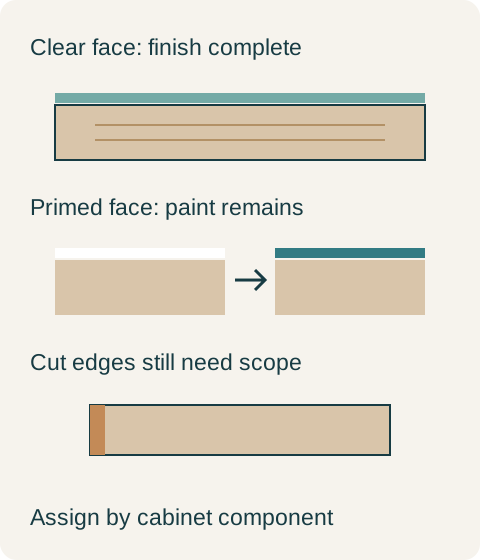
Do not compare cabinet panels described only as prefinished without asking which finishing stage is included. A clear-coated wood face can already have its intended visible finish; a pre-primed face still needs the specified paint system. Both can reduce shop work, but they remove different tasks and lead to different finished appearances.
A finished clear face is not a primer for the next color
Columbia describes UV Wood as hardwood plywood with a clear topcoat for applications including cabinet interiors and exposed faces. The program offers face-treatment choices, including finishing on one or both sides. The word UV here identifies the factory finish process; the delivered clear surface is not, by that description alone, a paint-ready primer.
Columbia separately describes FirstStep panels as pre-primed and ready to paint. Its published options distinguish a clear prepared surface intended for the stated solvent-based coating route from a traditional white primer requiring preparation before water-based paint. The particular variant determines the next finishing step; even the primer color alone is not enough to identify compatibility.
This distinction changes the quotation. A clear interior-panel package may omit shop face coating while still requiring cutting, assembly and the selected edge finish. A paint-ready exposed panel still needs its final color and completed finish inspection. A new cut edge was not the broad face treated at the factory, so its required completion belongs in the component scope rather than disappearing under the word prefinished.
Teaching example Conceptual production routes for clear-finished interiors and primed painted parts. No coating thickness, curing schedule or automatic cost saving is represented.
Use clear-finished interiors and paint-ready exposed panels for different jobs
Suppose a hypothetical order calls for natural-wood cabinet interiors and opaque painted exposed ends. The buyer selects identified clear-finished sheets for the interior components, with the necessary edge completion included. The exposed ends use a specified pre-primed panel variant plus its compatible shop painting process. Completed samples for both finishes are accepted, and the order assigns the different panel packages to their actual component locations.
In that hypothetical order, a lower quote supplying only white-primed exposed ends is rejected as an incomplete finished-cabinet price because final painting is absent. Another proposal to use clear-coated panels everywhere is also declined: it changes the intended exterior finish or introduces a separate repainting process. The chosen split removes unnecessary interior face finishing without deleting the exterior work the buyer still wants.
Compare completed components, not the length of the factory process
For pricing, hold the required end condition steady: selected color or clear appearance, treated faces, completed edges and ready-to-assemble parts. Then compare which tasks happen at the panel mill and which remain at the cabinet shop. There is no automatic savings percentage; a shorter finishing route can shift costs into material selection, handling or edge completion.
Keep the factory finish identity and the next authorized finishing stage on each material line. A later substitution must preserve the selected appearance and compatibility or revise the package explicitly. This gives prefinished a useful meaning in the order: the buyer knows exactly which work is already done and which work is still included before the cabinet arrives.
Pure White
Cream White
Light Warm Gray
Gray
Navy
Black
Oak Tone
Dark Walnut Tone
Design study These finish studies are design references, not a list of currently orderable colors. Screens and lighting change the appearance; compare a physical sample before choosing.See all finish options →
Inspect finished corners, shelf edges and accessible surfaces, and obtain the care instructions for the actual interior rather than judging it only by color.
A painted door, a wood-grain side and a plywood cabinet box can belong to the same cabinet. Here is how to read those parts, what the sample photos actually show, and which details to put on a quote.
The sample shows the door frame, a separate center panel, the face frame and the cabinet box. Each component has its own place in this Shaker construction.
Shaker construction: door frame, center panel, face frame and cabinet box. The cutaway helps locate these parts; confirm each material in the specifications for the selected cabinet.
01 / Door frame
The Shaker door has rails and stiles around a separate center panel. The frame and center panel are different components; confirm their materials in the specifications for the selected cabinet.
02 / Face frame
The face frame surrounds the opening at the front of the cabinet box and sits behind the doors. The face frame, door frame and cabinet box are separate parts.
03 / Cabinet box
The sample exposes the cabinet sides, interior surfaces and layered edges. The image does not establish the wood species or material specification of a selected cabinet.