

Construction & materials
Bleached wood or white stain: choose how the cabinet color is created
A pale wood cabinet can be lightened chemically or colored with white pigment. Compare completed finishes on the actual components before choosing the route.
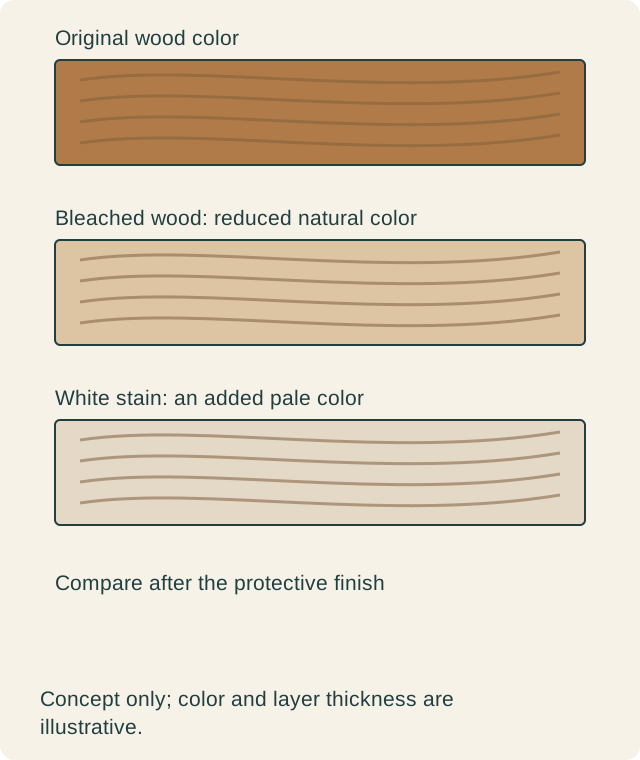
Choose bleached wood when the accepted result depends on reducing the wood’s own color. Choose a white stain when a pale added color gives the grain the appearance you want. Those are different operations, and they can also occur in an approved combined finish. For a cabinet order, the useful question is which completed surface works across the actual doors, ends and trim. A photograph described as bleached oak does not settle that choice.
Removing color and adding color are different jobs
Goudey describes its two-component Wood Bleach as removing natural color from bare wood. This establishes a lightening process, rather than the addition of white pigment.
Reading note: Goudey: High Performance Wood Bleach, product description.
General Finishes describes pigment-containing water-based wood stains and shows its Whitewash color on maple and oak. That is a named staining option, not a bleaching treatment.
Reading note: General Finishes: Water-Based Wood Stain, product description and Whitewash color samples.
These manufacturer examples explain the distinction without making either product the specification for your cabinets. The shop may offer a different documented system. Ask it to identify whether the pale result comes from chemical lightening, a white color layer, the selection of already pale wood, or a combination. Calling all of these natural wood leaves a consequential manufacturing decision unrecorded.
Decide which part of the wood should remain visible
Look at the background color between the grain lines as well as the grain itself. Do you want a less amber background with strong visible grain, or a cloudy white cast that softens the whole face? Those descriptions lead to more useful samples than a request for something lighter. Neither requires an absolute promise that every piece will reach an identical color.
A white layer can be part of the desired appearance. It is not automatically a compromise to be removed. Conversely, if the sample looks too milky, repeatedly asking for a whiter stain may move away from the intended transparent appearance. Compare a different completed route before choosing a more expensive or complicated wood selection to solve a color problem that belongs to the finish.
The finished door answers more than a bleached offcut
A raw lightened offcut shows an intermediate stage. The buyer will live with a protected, handled front, so the trial should reach that final stage before color approval. Include the intended sheen and the same sequence proposed for production. If a shop shows only a bare board and a separate topcoat chip, the combined surface still needs to be made and reviewed.
Judge samples upright beside the floor, countertop and nearby painted wall. Compare them together under the room’s normal daytime and evening lighting. Keep the comparison focused on the actual alternatives: changing the wood, the stain and the sheen at once makes it difficult to know which change improved the result. Photographing a labeled group can preserve the decision, though the physical pieces remain the better color reference.
A cabinet front may contain several wood constructions
The frame, center panel and exposed end may start from different stock. A pale finish that succeeds on a solid rail has not yet demonstrated its appearance on the proposed veneer. Request representative finished components joined in a small assembly when those differences will be prominent. This is a sampling requirement, not a claim that the materials must react differently.
Also establish what happens on door edges and reverse faces. The visible front is only part of the object. A dark inner edge can become conspicuous whenever a pale door opens, while an intentionally contrasting interior may be perfectly acceptable. Describe the surfaces the finish covers instead of allowing the word throughout to substitute for a component schedule.
A hypothetical island keeps the grain and changes the route
Imagine an owner who wants pale wood on the island while keeping strong grain movement. A completed white-stained trial reaches an appealing average color but gives the figured center a milky appearance the owner dislikes. A separate lightened-and-protected trial keeps the background pale enough and leaves the wanted grain readable. The owner selects that demonstrated route for the island, after comparing its solid frame and veneered center together.
The surrounding kitchen remains painted. There is no need to make the island match a wall-paint chip exactly; the brief calls for a distinguishable wood accent. The accepted sample group defines the range the owner likes. This is a resolved hypothetical design choice, not evidence that bleaching always preserves more figure or produces a better cabinet than white stain.
If the owner had preferred the soft white veil, the white-stained trial could have won. If neither trial had suited the retained floor, a different wood selection or an opaque finish might have been the more coherent revision. The decision should follow the visible result and the complete component offering, rather than loyalty to a process name heard at the start of the project.
New cabinetry and an existing finished kitchen are different projects
For new cabinets, the maker can prepare representative material before production. An existing kitchen presents a different question: what is already on the wood, which parts are veneer, and what alteration is feasible without changing the components? Do not treat a new-wood sample as proof that an installed finish can simply be made lighter in place.
Have the responsible finisher assess that existing construction and propose a representative completed trial. A proposal that needs replacement doors is a different scope from one that retains them. Compare those complete outcomes, including exposed ends. The owner’s task is to approve the result and scope; a short design guide cannot supply a chemical recipe for an unknown installed finish.
Preserve the chosen appearance without promising permanence
Keep the material identity, color-treatment route, final coating and component samples together. A later substitution of veneer, trim or coating deserves a comparison in the accepted sequence. A supplier should not have to infer whether a note saying white oak meant the species, the color family or a white-pigmented finish.
For a future repair or addition, use the record as a starting point and compare the new work with the installed group. The original sample does not guarantee unchanged wood color or an invisible replacement years later. It does, however, preserve the actual decision: the amount of pale color, the grain the owner wanted to keep, and the completed surface that made those two aims compatible.
Sources & further reading
- Goudey: High Performance Wood Bleach, product description
- General Finishes: Water-Based Wood Stain, product description and Whitewash color samples